
As an Amazon Associate we earn from qualifying purchases. This article contains affiliate links; we may earn a small commission at no extra cost to you.
Best chicken run cover is the single upgrade that separates a trouble-free, predator-proof backyard flock from endless tarp replacements and headache. Whether you’re troubleshooting leaks or buying your first covered chicken run, demanding hard specs—not just marketing claims—makes the difference between wasting money and real, lasting protection.
Key Takeaways
- Prioritize exact specs—material thickness, UV resistance, wind and water pressure ratings—when picking a chicken run tarp.
- Common tarp failures like sagging, UV breakdown, and rusted grommets can be prevented by insisting on reinforced designs and smart installation.
- The true best chicken run cover delivers multi-season comfort, keeps predators and weather out, and costs less in the long run.
- Why You Need a High-Quality Chicken Run Cover
- Key Features of the Best Chicken Run Cover
- How to Size and Choose the Right Chicken Run Tarp
- Failure Points to Avoid: Lessons from Real-World Use
- Pro Specifications Checklist: What Makes a Cover Truly “Best-in-Class”?
- Installation & Maintenance Tips for Long-Lasting Rain Protection Run
- Frequently Asked Questions About Chicken Run Tarp Selection
Why You Need a High-Quality Chicken Run Cover
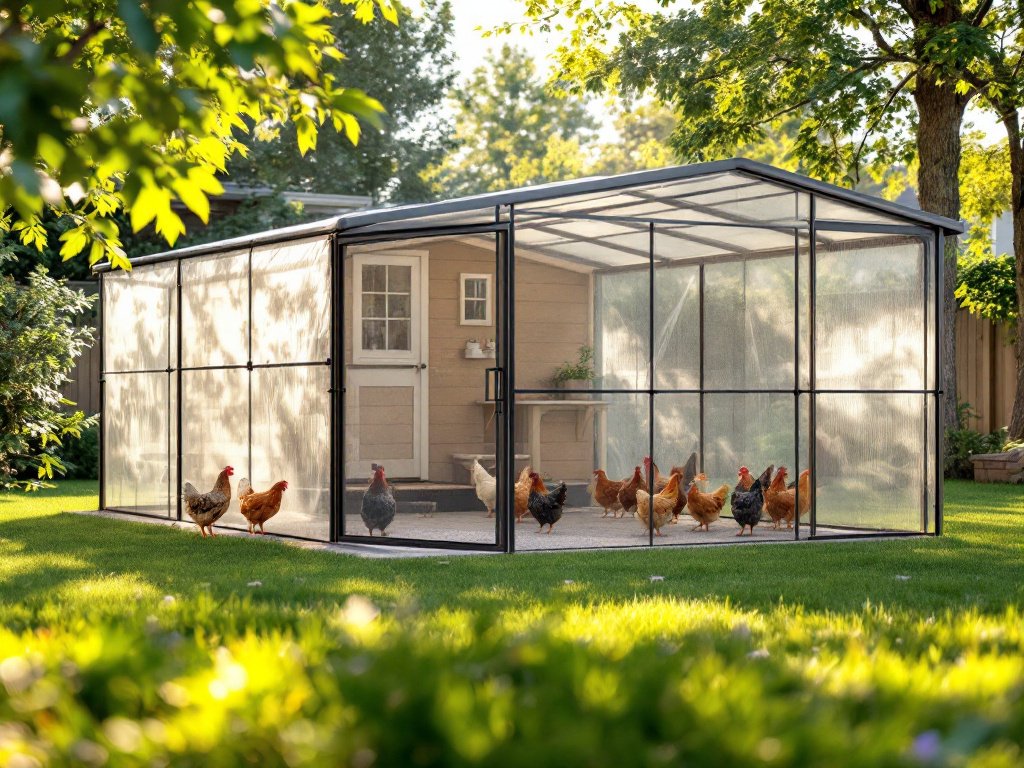
Not all covered chicken run setups are equal. Flocking to the cheapest run cover or a generic tarp can mean sagging, leaking roofs, sun-baked tears, and even sudden predator breaches—all putting your flock at needless risk. The best chicken run cover shields your hens from relentless sun, pounding rain, and winter snow, while also acting as a crucial layer against climbing or flying predators. Research confirms that many run covers fail early due to sagging, tearing under rain or snow, UV degradation of weaker plastics, or rusted grommets that rip loose in wind. Every year, countless backyard keepers replace tarps that didn’t specify UV resistance, water pressure proofing, or real reinforcement. Choose right, and your run stays dry, shaded, and safe for multiple seasons. Choose wrong, and you’ll be patching, replacing, and potentially exposing your birds to far bigger problems.
Key Features of the Best Chicken Run Cover
The specs printed on the packaging will make or break your chicken run tarp’s service life. When shopping for the best chicken run cover, demand the following:
- Material Quality: Heavy-duty polyethylene (PE) is the modern gold standard. Look for thickness rated between 12–18 oz/yd² (approximately 12–16 mil for many heavy-duty tarp products). You’ll find top-end specialty covers up to 20–30 mil for extreme climates.
- UV and Water Resistance: UV inhibition keeps the tarp from becoming brittle. Waterproofness should be rated at 1000 mm water pressure or higher (see example).
- Wind Load Rating: Many premium tarps are marketed for heavy wind or snow exposure, but wind-load ratings are not standardized across products.
- Dimensions: Must fit the run footprint with a slight overhang—see below for exact sizing tips.
- Reinforcement: Double-stitched or webbing-reinforced edges, extra thick grommet panels, and abrasion-resistant fabric all extend lifespan.
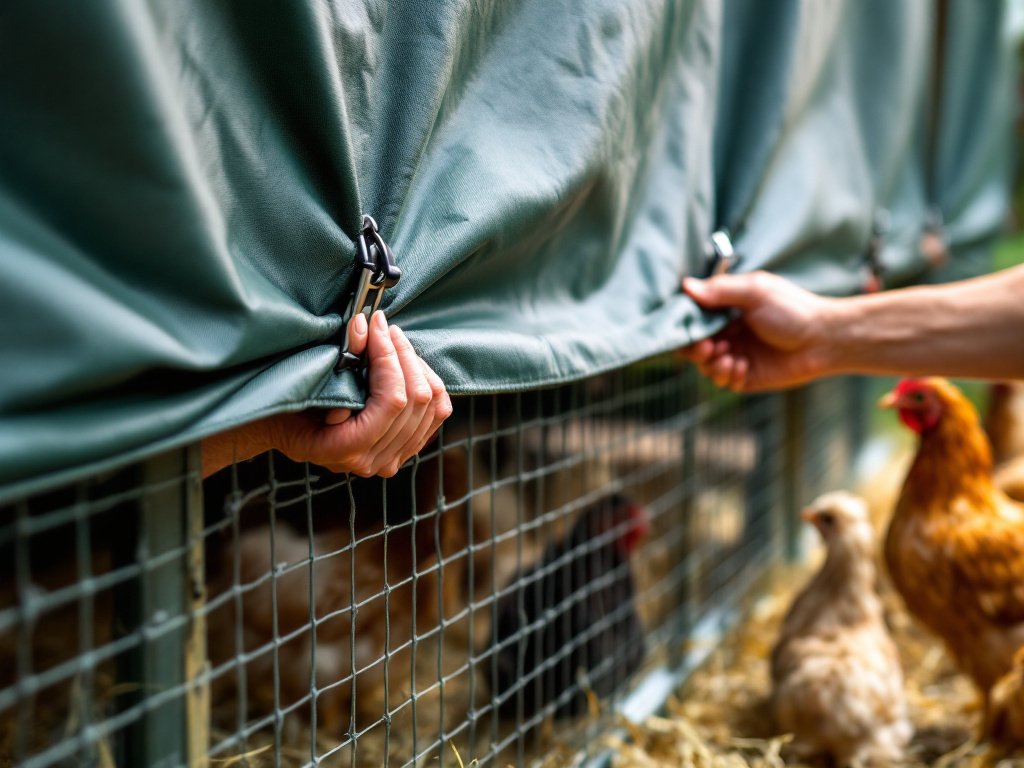
- Grommet Type and Spacing: Stainless-steel ½-inch grommets spaced every 12–18 inches are ideal (view premium options).
- Warranty: A real sign of quality is a limited warranty lasting 1–2 years, not “satisfaction guaranteed.”
For even more peace of mind, some brands pre-rate their covers for wind, snow load, and temperature swings. Always compare real specs, not marketing phrases.
How to Size and Choose the Right Chicken Run Tarp
Chicken runs come in all shapes, but most backyard flocks need only a few standard sizes. Here’s how to land the right fit—and avoid overpaying.
- Small Runs: Around 8 × 6 ft (48 sq ft), fits 3–6 chickens comfortably. These covers often price in the low tens of dollars, depending on material and seller (example product).
- Medium Runs: About 12 × 8 ft (96 sq ft); expect wide fit, $50 to $70 range.
- Large Runs: Around 15 × 10 ft (150 sq ft); usually between $90 and $130.
Always measure your run at its widest points. For rain protection runs, a modest overhang on each side (4–8 inches) lets water shed off the edge instead of down sidewalls. Pair your run size with the closest available tarp dimension—custom sizes are available for odd-shaped or walk-in structures (see large run cover examples).
For more on structuring and upgrading your run itself, see our complete guide to the best chicken run choices.
Failure Points to Avoid: Lessons from Real-World Use
The fastest way to waste your money is to ignore real-world pain points. Here’s where most covered chicken run mistakes happen—and how to sidestep them:
| Failure Point | Why It Happens | Prevention |
|---|---|---|
| Water Pooling & Rot | Flat tarps or sag develop, water collects and sits, causing fabric rot and moss growth | Tension tarp tight, add center supports or pitch for drainage |
| Sagging Under Snow or Rain | Low tension, large gaps between grommets, or weak fabric weight | Choose high fabric weights (12–18 oz/yd²), anchor every 12–18 inches |
| UV Degradation | No UV inhibitor in fabric, especially clear or pale tarps | Always pick a cover marked as UV-inhibited or UV rated |
| Rusting or Tearing Grommets | Non-stainless grommets, wide grommet spacing, over-tightening in wind | Choose stainless-steel grommets, bungee attachment for give |
| Edge Ripping or Seams Failing | Single stitching, thin edge reinforcement, wind pulling at corners | Select double-stitched, webbing-reinforced covers |
| Anchors Pulling Out | Inadequate ground anchoring, not using ground loops or stakes | Secure with ground anchors or loop through run fencing |
Many chicken owners report that the biggest reason for failures isn’t fabric, but poor install and ignoring tension. Even a high-quality tarp forms dangerous water pooling if not tensioned and angled to let rain run off. UV damage is a close second—especially in sunbelt states. Avoid anything that doesn’t openly state “UV-inhibited” or waterproofing to 1000 mm or greater. For a full rundown on building a predator-tight setup, see our predator proof chicken coop guide.

Pro Specifications Checklist: What Makes a Cover Truly “Best-in-Class”?
Going beyond buzzwords, here’s what genuinely separates the best chicken run cover from also-rans:
- Stainless-steel ½-inch grommets, spaced tight at 12–18 inches all around
- Heavy-duty PE fabric between 12–18 oz/yd² — real numbers, not “heavy-duty” claims
- Double-stitched or webbing-reinforced edges for anti-tear under wind loads
- Guaranteed UV-inhibited and waterproof to a minimum of 1000 mm water pressure
- Wind load rating of at least 15 lb/ft² for most backyards (higher for exposed sites)
- 1–2 year limited warranty with clear replacement terms (not “lifetime satisfaction”)
- Ball bungee cords or robust tie-downs for even tension and flex in gusty weather
- Optional: Pre-cut holes or reinforcement for seasonal shade panels or roll-up sides
Don’t settle for less. If your supplier can’t provide specs like grommet diameter, edge treatment, or fabric weight in writing, walk away. For more details on flock comfort in all conditions, review our advice on winter chicken coops and how to keep chickens warm in winter.
Installation & Maintenance Tips for Long-Lasting Rain Protection Run
The best shade cover for run life starts with how you install and care for your tarp:
- Bungee or Strap Tensioning: Always use ball bungee cords, not rope, for flexible give—this stops tearing in high winds.
- Proper Anchoring: Attach to fencing using ground stakes or built-in run frames. Avoid cheap zip-ties—they break quickly.
- Drainage Pitch: If you can, pitch your tarp with extra central or side supports to prevent water pooling in rain protection runs.
- Seasonal Checks: Inspect for UV-fading, seam separation, and grommet rust at least once per season—replace or patch at the first sign of weakness.
- Cleaning and Storage: Hose off droppings and debris regularly. If you swap tarps seasonally, let fully dry before packing away.
Smart use, solid anchoring, and seasonal inspection will prevent the main issues owners experience with cheaper or poorly installed covers. Need help with predator skirts and secure fencing? See our expert review on the best hardware cloth for chickens for a deep dive.
Frequently Asked Questions About Chicken Run Tarp Selection
How do I verify UV and waterproof ratings for a chicken run tarp?
Look for clear specs like “UV-inhibited” or a direct UV rating, along with a waterproof rating stated in mm (1000 mm or higher is preferred). Branded covers should list this info on the packaging or webpage—if they don’t, ask the seller or choose a more transparent supplier. Always double-check before buying.
How often will I really need to replace a quality chicken run cover?
If you purchase a cover made from heavy-duty PE (12–18 oz/yd²) with UV resistance and reinforced seams, many owners get multiple years of use. Cheaper tarps without these features may need replacement after a single season, especially in harsh sun or heavy snow.
Are clear or opaque tarps better for a covered chicken run?
Opaque tarps (white, silver, or green) often provide superior shade and better UV protection. Clear tarps let in more light but can increase temperature and may degrade faster under sun exposure without specialty UV inhibitors.
What’s the best way to secure a run cover so it doesn’t tear loose in wind?
Use ball bungees or elastic straps in every grommet spaced closely (every 12–18 inches). Secure the edges to run framing or ground stakes—not just the mesh fencing. Avoid zip ties, which are brittle over time.
How do I handle warranty issues if my chicken run tarp fails early?
Quality brands often provide a limited warranty, but terms vary by manufacturer. Keep your purchase receipt and follow the manufacturer’s claim process—often photos of the damage and original packaging will be needed. Always read the fine print on exclusions such as windstorm or improper installation.
Conclusion
By demanding real specifications and learning from common traps, you get full weather protection and peace of mind for your flock. The best chicken run cover is the one that’s built for sun, rain, and rough use—without surprise failures a few months in. Go beyond “heavy-duty” marketing and get specs in writing for lasting results.
Ready to give your hens a safer, longer-lasting covered chicken run? Compare true spec sheets, demand real warranties, and make your next purchase the last one you’ll need for years. Secure your flock and your investment—start upgrading today.
Sources
- How Thick Should a Tarp Be for Waterproof Protection?
- Hydrostatic Head for Tarps: 2000 vs 8000 vs 10000 mm
- Tarp Material Weight & Thickness Chart | Oz, Mil & mm Comparison
- Best Waterproof Canvas Tarpaulin for Your Outdoor Needs?
- Tarp Hardware & Grommets
- Typical tarp warranty terms vary by brand and seller