
As an Amazon Associate we earn from qualifying purchases. This article contains affiliate links; we may earn a small commission at no extra cost to you.
Fly control for chicken coop is a year-round challenge for small flock keepers, especially as summer pests surge and health worries rise. Most owners want fly solutions that actually work, cut down on mess, and don’t drain the budget—but the reality is, there’s no one-size-fits-all answer, and many popular fixes backfire or cost more than anticipated.
Key Takeaways
- Most fly control for chicken coop products have trade-offs, with hidden costs or flock health concerns rarely listed upfront.
- User complaints focus on messy, labor-intensive maintenance and solutions that lose effectiveness quickly or irritate birds.
- Reliable fly reduction requires realistic expectations, ongoing effort, and paying close attention to cost-per-use—not just product price.
- Why Flies Are a Persistent Problem in Chicken Coops
- Popular Fly Control Methods—How They Actually Perform
- What Chicken Owners Dislike—Failure Modes and Negative Reviews
- What Do They Cost? Full Price and Labor Breakdown
- The Hidden Impacts—Health, Safety & Environmental Risks
- What’s Missing From Most Coop Fly Control Guides?
- The Data Every Owner Needs—How to Choose a Solution That Works
- Frequently Asked Questions
Why Flies Are a Persistent Problem in Chicken Coops
Many chicken keepers face a coop fly problem. Flies are drawn to manure, spilled feed, and the warmth and moisture that build up fast in busy coops—especially in summer when fly populations skyrocket. Seasonal spikes in heat and humidity ramp up fly breeding cycles, making summer coop pests almost impossible to ignore. Even with diligent cleaning, you may not see a completely fly-free year, but flies can still become too bothersome to ignore. Flies not only stress your flock, but they also carry bacteria and spread disease, increasing the risk of health issues for both chickens and humans.

Popular Fly Control Methods—How They Actually Perform
When it comes to fly control for chicken coop and run areas, owners typically use three common categories of solutions: traps, repellents, and biological controls.
Sticky Fly Tape (like sticky fly tape and fly trap chicken coop canisters) physically catch adult flies. They’re affordable and visible, selling for roughly $5-10 per roll (sticky tape), about $30-50 per captivator trap, or about $10-20 per disposable roll. However, many users complain traps fill up too fast, get “gross” to clean, or even injure pecking hens who get stuck. Disposable solutions can add up over a long summer, both in cash and cleanup time.
Chemical-free repellents—including essential oil sprays, cedar shavings, vanilla sachets, and unproven water-bag tricks—are easy to try and usually cost $5-15. But they often need daily reapplication, give inconsistent results, and may cause irritation to skin or respiratory tracts of sensitive birds. Want more detail? Here’s a quick overview of DIY natural fly control ideas.
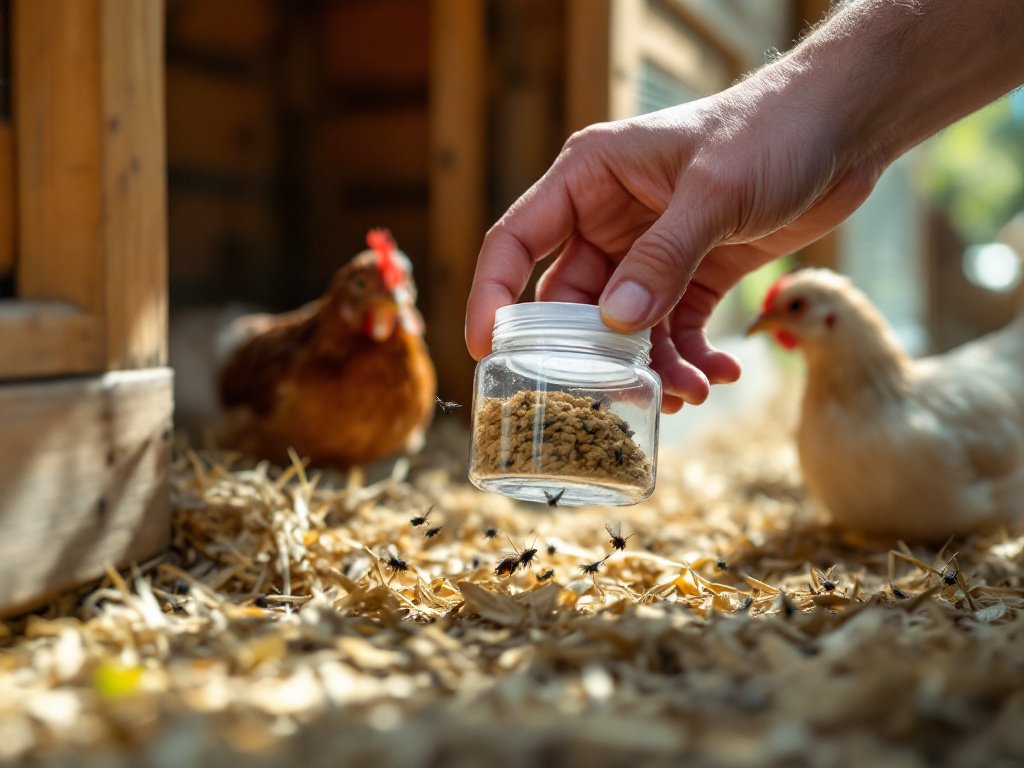
Biological predators (tiny fly-eating insects sold in packets) offer a different approach. Prices average $15-30 per pack, and you place these near manure and compost areas. In the chicken coop, though, curious hens often eat these “helpers” or disrupt their natural life cycle, so results are spotty at best and the reduction in fly larvae is modest. Over a week, their effectiveness sharply declines, requiring regular replacement.
“Sticky fly tape costs $5–10 per roll, captivatortrap $30–50 per unit, super-fly roll $10–20 for a disposable pack, fly-predator packets $15–30.”
“Sticky fly tape often injures birds or pecks at their feathers; predator insects are sometimes eaten by chickens and lose potency after a week.”
What Chicken Owners Dislike—Failure Modes and Negative Reviews
User reviews and owner forums are full of stories highlighting problems behind even the best fly control for chicken coop solutions. Here are the most common headaches:
- Traps fill fast and get messy, especially in humid conditions. Sticky fly tape can stick to chicken feathers, causing distress or injuries, while Captivator Traps may require gross, smelly cleanouts every 1-3 days.
- Fly predators lose effectiveness within a week, especially if chickens eat them or weather ruins their habitat. Many report only minimal improvement for the cost.
- Chemical-free repellents (like DE powder) can irritate chicken respiratory systems if over-applied, and may do little against heavy infestations; essential oil sprays sometimes cause skin or eye itchiness.
- Homemade bag-of-water tricks are cheap but lack credible proof—more a “last resort” than a best practice. To date there are no definitive studies or data on the efficacy of water bags as a method of house fly control.
- Labor and ongoing costs add up, with regular maintenance is often required to keep basic control.
According to aggregate reviews: “The most common negative reviews cite sticky fly tape that traps chickens or captivatortraps that are ‘gross’ to clean after a two-day fill; DE powder can cause respiratory irritation if over-applied.”
For more on preventing mess and labor issues, see our guide on how to clean a chicken coop.
| Method | User Complaints | Replacement/Lifespan | Labor/Cleanup |
|---|---|---|---|
| Sticky Fly Tape | Traps feathers, injures birds, fills fast | 3-7 days | Messy, may stick to hands/gloves |
| Captivator Trap | Gross to clean, leaks, lures non-target insects | 2-5 days or when full | Unpleasant to empty, needs frequent washing |
| Fly Predators | Birds eat them, lose potency after a week | 1 week per packet | Must monitor manure piles, replace predators |
| Natural Repellents | Inconsistent, daily reapplication, sometimes irritates birds | 1-3 days (short acting) | Frequent spraying, watch for health reactions |
| Bags of Water | Unproven effectiveness, mostly folklore | N/A | Minimal, but little real impact |
What Do They Cost? Full Price and Labor Breakdown
The real cost of fly control for chicken coop setups goes well beyond one-time product prices. Each approach comes with its own schedule for replacement, reapplication, or maintenance—plus the value of your time spent cleaning up gooey or bug-filled traps.
- Sticky fly tape: $5-10 per roll; replace every 3-7 days in heavy summer months—labor adds up.
- Captivator trap: $30-50 per unit—not disposable, but cleaning and luring refills can be unpleasant and require gloves.
- Disposable traps: $15-25 for a two-pack, last 3-7 days until full, then toss.
- Super-fly roll: $10-20 for disposable packs, must be thrown away when loaded.
- Fly Predators (biological): $15-30 per packet; effective for roughly a week, but often less if birds hunt them.
- Essential-oil repellents: $10-25 per kit; apply daily or as needed, results and cost are variable.
- Cedar shavings/vanilla sachets: $5-10, easy to use but generally short-lived and low-impact.
With all options, the actual “cost per month” is higher than the sticker price—consider frequency of buy/replace plus the hassle factor. If you are choosing bedding, see our deep dive on best bedding for chicken coops to help offset fly populations with better materials.
The Hidden Impacts—Health, Safety & Environmental Risks
What most chicken owners do not see on product labels is the very real risk of health issues—or environmental side effects—linked to fly control strategies:
- DE powder (diatomaceous earth): Over-application can cause respiratory irritation in both chickens and humans—especially if fine dust gets airborne (see our full guide to diatomaceous earth for chickens).
- Essential oils/repellents: May trigger skin, eye, or breathing issues for some flock members.
- Fly predators: When released, may be eaten by chickens (rendering them useless), disrupt non-target insect life, or fail to establish if the manure mix is dry or cleaned too often.
- Disposable baits/traps: Sometimes attract unintended wildlife or leak insect-laden liquids when tossed in general waste.
“DE powder can cause respiratory irritation if over-applied; essential oils may irritate chicken skin or respiratory tracts; predator bugs are sometimes eaten by chickens.”
Some owners also worry about the regulatory status or ecological impact of releasing non-native predators, though small-batch use in hobby coops is rarely enforced. Safer application means understanding these risks and using them mindfully.
Coop ventilation also matters a great deal for healthy airflow and odor control, further helping to keep fly populations down; for more, see our chicken coop ventilation guide.
What’s Missing From Most Coop Fly Control Guides?
Most articles about fly control for chicken coop setups skip key decision-making details, leaving owners guessing about what really works long-term. Here are the three big gaps you’ll rarely see filled:
- Quantitative efficacy: Guides seldom provide before-and-after fly counts, or even a clear timeframe for how quickly (and for how long) each solution works.
- True cost-benefit breakdown: Few sources include actual product lifespan, frequency of replacement, and the labor or mess involved per week or month.
- Health and environmental assessment: Documented cases of chicken irritation, non-target effects, or compliance with local regulations are rarely published—even though they matter.
For example, “few guides provide percent fly reduction over a defined time frame, cost-per-use, or documented adverse reactions in chickens.” This lack of transparency makes comparing options difficult. This is why smart owners look for DIY trial data and crowd-sourced experience instead of marketing promises.

The Data Every Owner Needs—How to Choose a Solution That Works
Choosing fly control for chicken coop setups means tracking actual results. Here’s the bare minimum data to gather, whether trying a new trap, predator, or repellent:
- Fly count reduction: Take simple fly counts (sticky card or visual checks) before and after introducing any new method, ideally over 30 days.
- Reapplication/lifespan: How often does it need to be swapped, replaced, or cleaned out?
- Cost per use/month: Add up everything spent and time invested, not just retail price.
- Safety/adverse reactions: Monitor for chicken sneezing, eye irritation, skin problems, or odd behavior after introducing any new product or “helper insect.”
In other words, “researchers should gather pre- and post-fly counts over 30 days, price-per-use, product lifespan, and adverse reaction documentation.”
Practical tip: Log your results (before and after photos, counts, product notes) and share your experience—good, bad, or ugly—in the comments below. Your feedback helps other DIY flock keepers make smarter decisions. Looking for help with cleaning routines or products that reduce daily workload? We recommend starting with coops deodorizers for ammonia in coop issues and checking no-waste chicken feeders here.
For larger or more pest-prone flocks, you might explore cold hardy coops with easy cleanouts or automatic doors to keep pests out overnight.
Frequently Asked Questions
Why do flies keep coming back even after I clean the coop?
Flies breed rapidly in manure, spilled feed, and moist bedding. Even regular cleaning can’t eliminate every egg or larva. Hot, humid weather creates repeat infestations, making total elimination very unlikely, but steady management makes a major difference.
Are fly predators safe for chickens?
Fly predators (tiny parasitic wasps) are generally safe, but in small backyard coops, chickens may eat them, making the treatment less effective. Place predator packs near manure or compost rather than inside the coop if possible.
Can diatomaceous earth (DE) help control flies in my chicken coop?
DE can dry fly larvae in bedding, but over-applying it can cause respiratory irritation for birds and people. Always use food-grade DE, apply lightly, and avoid raising dust.
What’s the fastest fly control method for overcrowded coops?
Sticky traps and quick-clean disposable bait traps offer fast, visible results, but require frequent replacement and careful placement away from chickens. Long-term balance comes from regular cleaning, bedding changes, and good ventilation.
Do homemade repellents really work?
Results vary widely. Essential oil sprays, vanilla, and cedar may reduce flies short-term, but require frequent use and can cause irritation for some birds. No homemade method offers foolproof control for heavy infestations.