
As an Amazon Associate we earn from qualifying purchases. This article contains affiliate links; we may earn a small commission at no extra cost to you.
Best electric poultry netting is the go-to solution when you need secure, flexible protection for your chickens, ducks, or geese. But not all netting is created equal—and some common product reviews miss real maintenance costs, hidden warranty exclusions, or the specs that truly matter for predator defense and ease of use.
Key Takeaways
- The best electric poultry netting balances energizer power, net design, and grounding for maximum portability and predator deterrence.
- Solar fence energizers are convenient but require more investment and regular sun; plug-in units offer power, but may limit portability.
- Watch for hidden ownership costs: real repair, voltage loss, and warranty gaps can impact your fencing budget more than upfront price tags suggest.
- What Makes the Best Electric Poultry Netting?
- Comparing Power Sources—Plug-in vs. Solar Electric Chicken Fence
- Avoiding Common Failures: What Most Guides Miss
- Warranty Reality and Long-Term Costs
- Expert Setups & Cost-Saving Maintenance Tips
- Conclusion
- FAQs
What Makes the Best Electric Poultry Netting?
Finding the best electric poultry netting means looking beyond the product label. Key factors are energizer joule rating, net height and strand count, mesh opening size, total run length, and overall portability. Energizer output is the backbone: you want at least 0.12 joules for short (164 foot) single-roll setups, but more (up to 2 joules) for deterring tough predators or running multiple fence segments. Net height matters for multi-species use—standard is 48 inches, but taller options can add extra security against jumpers. Mesh design must keep your flock in, without creating too much resistance, and strand count should be high enough to prevent predator push-through. Price can be deceiving: Premier 1 48-inch netting costs around $190 per 164 foot roll, but many Chinese import nets offered at about $115 fail after just one or two seasons.

Don’t overlook grounding and power source. Solid grounding with a 6 to 8 foot copper rod and connector (about $25) is critical for reliable pulsing. Prioritize fence height and mesh size if predators are common or you need to keep your flock in multiple places during the season. A good portable poultry fence should be easy to move, lightweight (under 20 lbs), and quick to set up. If you want an all-in-one solution, make sure the brand you choose actually supports your region’s weather and predator challenges.
Learn more about predator-proofing your chicken coop for total bird safety, or add even more peace of mind by exploring upgrades like automatic chicken coop doors to keep night-time intruders out.
Comparing Power Sources—Plug-in vs. Solar Electric Chicken Fence
Your choice of electric chicken fence energizer determines both long-term hassle and up-front cost. plug-in units (mains-powered) energizers usually cost less up front ($120 to $180), supply steady power for long runs, and avoid battery worries—but if you need to move your fence or lack a close outside outlet, they may not fit. solar fence energizer kits, with a panel and battery, run $280 to $350. They cost 2 to 3 times more up front than comparable plug-in units. That premium pays for maximum placement flexibility, but solar units depend on getting at least six hours of sun daily to avoid battery drain and performance drops. Source
Solar systems are self-contained and open up new spots for your poultry, whether you’re rotating pasture or keeping birds in a remote orchard. But batteries need replacement every couple of years and cloudy streaks can leave you troubleshooting mysterious brownouts. With plug-in, you trade some flexibility for reliability. Double-check your actual duty cycle; a solar unit with a 0.12 joule output may only power one net in lush, weed-free conditions. Strive for a strong fence voltage at the farthest net end for real predator deterrence. For more information about keeping birds secure on a budget, check out coop upgrades for harsh weather.
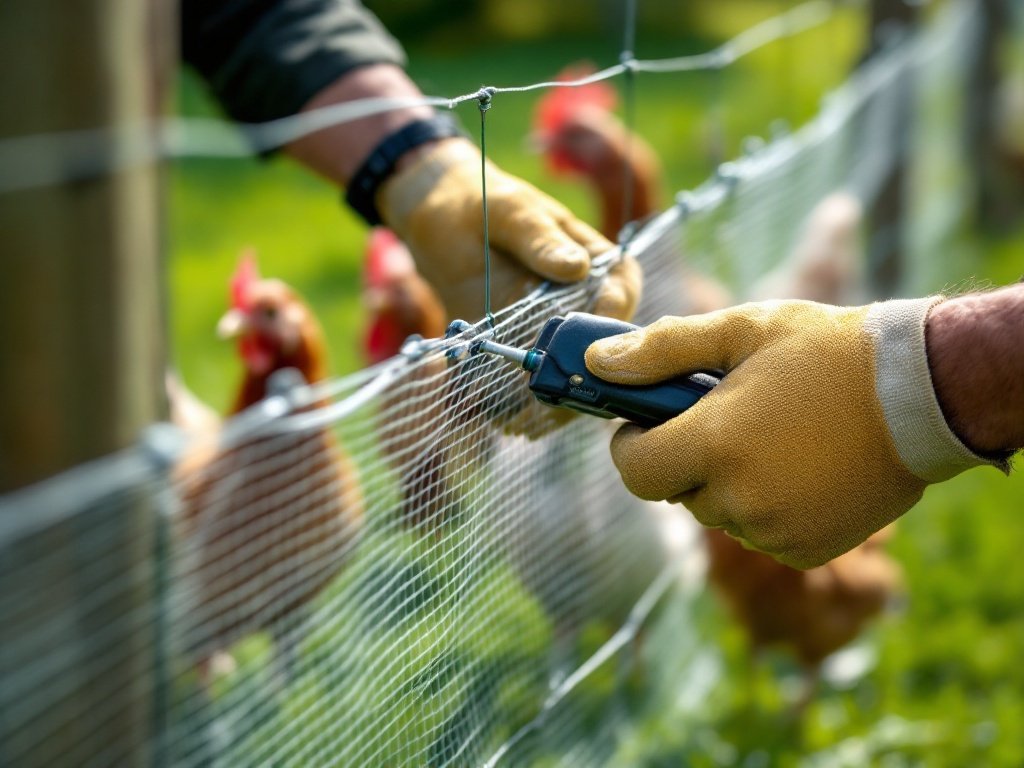
It’s also important to know typical run length and costs per roll. For instance, Premier 1 48-inch netting (about $230 per 164 foot roll) lasts longer than lower-cost imports that may fail after only one or two full seasons (source).
Avoiding Common Failures: What Most Guides Miss
Most generic guides skip over the real failure modes you’ll face. Three main issues come up for most backyard flock owners and small farm operators:
- Voltage Drop Across Long Runs: The further your portable poultry fence runs, and the more nets you daisy-chain, the lower your effective fence voltage. Without enough joule output, voltage at the far end drops and predators may crawl under with no shock. Upgrade to a more powerful energizer (0.24–0.44 joule minimum for 200+ feet, 2 joules if coyotes or large predators are present), and consider a second ground rod. Reference
- Hidden and Ongoing Repair Costs: While basic splice repair kits run $15–$30, replacing a failed energizer can be $120–$350. If corrosion affects net posts, repair costs stack up at $20–$40 per post. Cheap nets mean more frequent replacements. Over a 3-year fence lifespan, what looks affordable initially can end up costing more.
- Weed Arcing and Vegetation Shorting: Tall grass or weeds touching live strands sap energy and create ongoing shorts. This quickly drains solar batteries and leaves fences weak or dead. Weed-resistant net coating helps, but nothing replaces regular spot mowing or trimming. Some owners find clearing a 6-inch path prevents most problems. Net sag also worsens weed contact.
| Issue | What Happens | How To Prevent | Repair Cost Range |
|---|---|---|---|
| Voltage Drop | Weak shock, fence ineffective | Upgrade energizer, add ground rod | See energizer cost |
| Corrosion Repairs | Poor connectivity, shorts | Use anti-corrosion paste, inspect joints | $20–$40/post |
| Weed Arcing | Rapid battery drain, energizer stress | Trim grass, apply weed coating | $15–$30/splice |
| Energizer Failure | No fence power at all | Protect from weather, surge arrestor | $120–$350/unit |
Want your poultry fence to last? Check our in-depth guides on avoiding waste with the right chicken feeder and review tips for winter chicken care—problems with cold or corrosion don’t stop at your netting.

Warranty Reality and Long-Term Costs
Most buyers focus on year-one performance—few realize warranty coverage and exclusions are just as critical. Name brands usually offer one to two years on energizers and one year for the actual netting. Solar panel parts are sometimes covered for two years. The fine print often excludes corrosion, UV solar degradation, or damage from animal chewing. Cheaper imports may have no warranty support at all, which is risky considering some owners report product failures in their second season.
Even industry leaders limit most fence netting coverage to manufacturing defects. If your cables corrode due to seasonal moisture or a battery fails to hold charge, you could be on your own for the replacement. Budget for some repairs: splice kits, corroded post swaps, or even new energizers. With higher-end models, longer uptime often means fewer out-of-pocket surprises later. For even more coop efficiency upgrades, see our review on heated chicken waterers or compare top-rated nesting boxes.
Expert Setups & Cost-Saving Maintenance Tips
Proper setup and regular care are key to making your predator fence pay for itself over time. Here’s how to maximize performance and cut future hassles:
- Use high-visibility, properly insulated netting for easy movement and fewer accidental shorts.
- Install the energizer above ground, covered or sheltered from rain. Avoid placing batteries or controllers directly on soil.
- For a portable poultry fence, roll up and relocate sections every few weeks to prevent soil rutting and maintain grass health.
- Trim or mow under the fence before setup to minimize weed arcing. Lay down a 6 inch clear strip where possible.
- Apply anti-corrosion paste to connection points at season’s end to extend life (many owners neglect this).
- Add a second ground rod if performance seems weak or terrain is extra dry or sandy.
- Use a voltage tester monthly—especially after moving the fence or after storms—to catch hidden failure spots early.
With the right care, your netting and energizer can outlast their basic warranty terms and save money in repairs. For predator-heavy environments, always upgrade to higher joule output and consider running two fence lines at critical corners. If deep winter is your season, explore the best coop bedding for long-term cleanliness, which also reduces outside wire corrosion risks.
Conclusion
Choosing the best electric poultry netting comes down to investing in the right specs—think about energizer power, netting durability, run length, and real-world warranty terms rather than just price. Prioritize predator resistance, easy maintenance, and fence mobility. Carefully consider solar versus plug-in power for your land, and never underestimate the importance of regular weed control and voltage testing. With the right setup, your best electric poultry netting can protect your flock for seasons to come with less hassle and fewer costly surprises. Ready to upgrade your poultry safety? Compare top netting choices and get your next fence project started now.
FAQs
What energizer output do I need for a 164 foot electric poultry netting roll?
For a single 164 foot roll, a 0.12 joule energizer is sufficient in clear, low-weed conditions. For longer runs, more nets, or known predator activity, aim for 0.24 to 2 joules to prevent voltage drop and ensure effective shocks.
How often should I do maintenance on my poultry netting?
Inspect fence voltage at least monthly and after major storms. Trim grass and weeds around the base as needed—typically every couple of weeks—to avoid vegetation grounding and shorts. Apply anti-corrosion paste at the end of each season.
What’s the main downside to cheap import poultry netting?
Many budget nets cost less up front, but may fail earlier due to lower build quality, UV resistance, and limited warranty coverage. Repair and replacement costs can erase initial savings quickly.
Is solar or plug-in power better for electric chicken fences?
Solar is best for outlying areas with no power access and high mobility needs but has higher up-front costs and relies on adequate sunlight. Plug-in is more economical if you have easy power access and want lower operating hassle.
How do I stop weed arcing and voltage drops in portable poultry fences?
Keep grass trimmed at least 6 inches away from netting, use weed-resistant net coatings, and upgrade energizer joule rating if voltage at net ends drops below 3,000 volts. Add a second ground rod on long runs or in tough soils.
Sources
- Backyard Coop Lab – Best Chicken Fencing 2026: Electric Netting & Poultry Fence Picks
- Starkline – Premium Electric Poultry 48
- Melissa K. Norris – Electric Fence Netting (Everything You Need to Know)
- Chickens and More – 5 Best Electric Chicken Fences: Buyer’s Guide & Top Picks
- The Happy Chicken Coop – Our Top 5 Picks of Electric Poultry Netting