
As an Amazon Associate we earn from qualifying purchases. This article contains affiliate links; we may earn a small commission at no extra cost to you.
Best chicken coop lights for winter can directly impact your hens’ winter egg production, electricity bills, and the safety of your coop. Here’s the evidence-based guide no one else is giving you: specific light specs, timer setup instructions, real cost breakdowns, and common pitfalls—so you maximize eggs, not surprises.
Key Takeaways
- Supplemental lighting that provides 14–16 hours of light per day can boost winter egg production, but results vary by flock, breed, and management.
- LED coop lights from 5–10W with 400–800 lumens and about 2,700–3,000K are commonly recommended; aim for 10–20 lux at perch height and use a programmable timer.
- Expect to spend around $10–$12 per winter season on electricity, but watch out for timer errors and cheaply made lights that risk safety issues.
- Why Supplemental Lighting Matters for Winter Chickens
- What Makes the Best Chicken Coop Lights for Winter?
- Setting Up: How Much Light Do Your Hens Need?
- Using a Coop Light Timer: Timing and Schedules That Work
- Power and Cost Estimates: What Will You Spend (and Save)?
- Common Problems and How to Avoid Them
- Quick Comparison: Top Chicken Coop Lights for Winter (with Specs)
- FAQs: Maximizing Winter Egg Production with Safe, Effective Lighting
Why Supplemental Lighting Matters for Winter Chickens
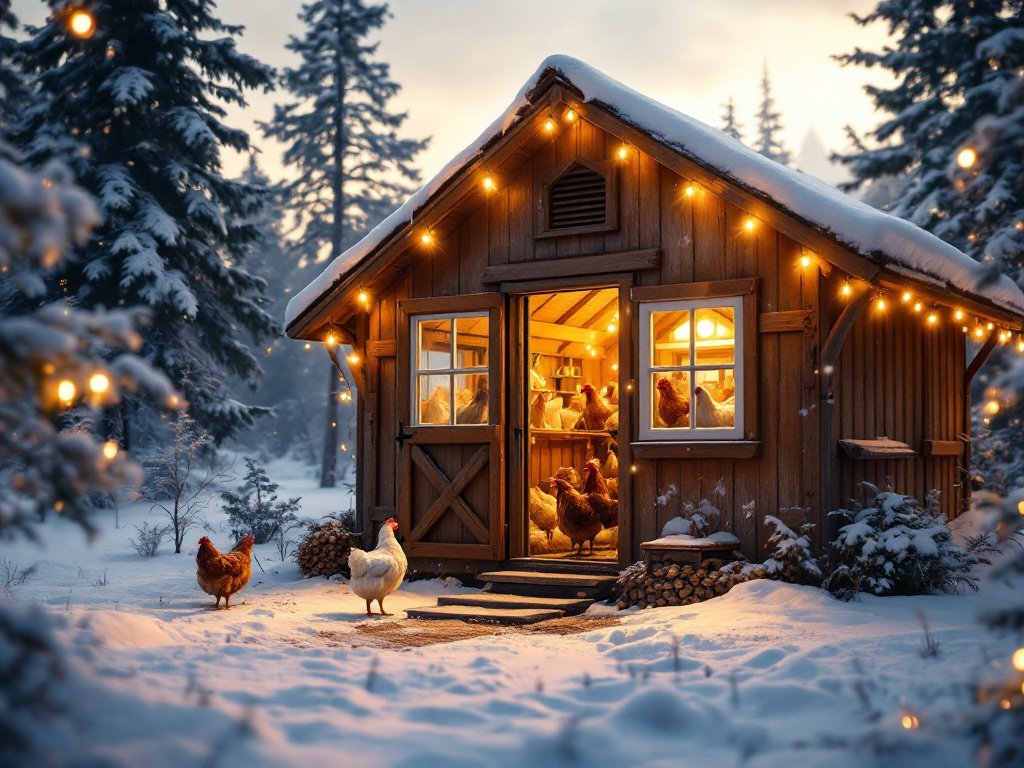
Hens need about 14–16 hours of light a day to maintain steady egg production. When winter comes, shorter days can slow or even halt your flock’s laying, leaving you with empty nesting boxes. Supplemental lighting is the proven way to replicate sunlight, stimulating the birds’ natural rhythms and keeping winter egg production close to normal. Artificial lighting can help maintain winter egg production when used correctly. This is essential for small-scale and backyard keepers who rely on a steady egg supply all year.
What Makes the Best Chicken Coop Lights for Winter?
When shopping for the best chicken coop lights for winter, prioritize the following LED specs:
- Wattage: 5–10 W is adequate for most backyard coops.
- Lumens: Look for 400–800 lumens—enough for even, gentle brightness without glare.
- Color Temperature: 3,000–5,000 K (warm to neutral white) mimics natural daylight, which hens prefer.
- Durability & Lifespan: LEDs with 25,000–50,000 hour lifespans are common in quality products.
- Built-in Timer: Saves effort and lessens programming errors, especially in power outages or time changes.
Fixtures range from $10–$30 for basic units and $30–$80 for ones with integrated timers and weather-resistant housings. LED coop lights are best because they are energy-efficient, shatterproof, and run cool—which lowers fire risks, an important safety value in tight coop spaces. For more on keeping your birds warm in other ways, see keep chickens warm in winter.
Setting Up: How Much Light Do Your Hens Need?
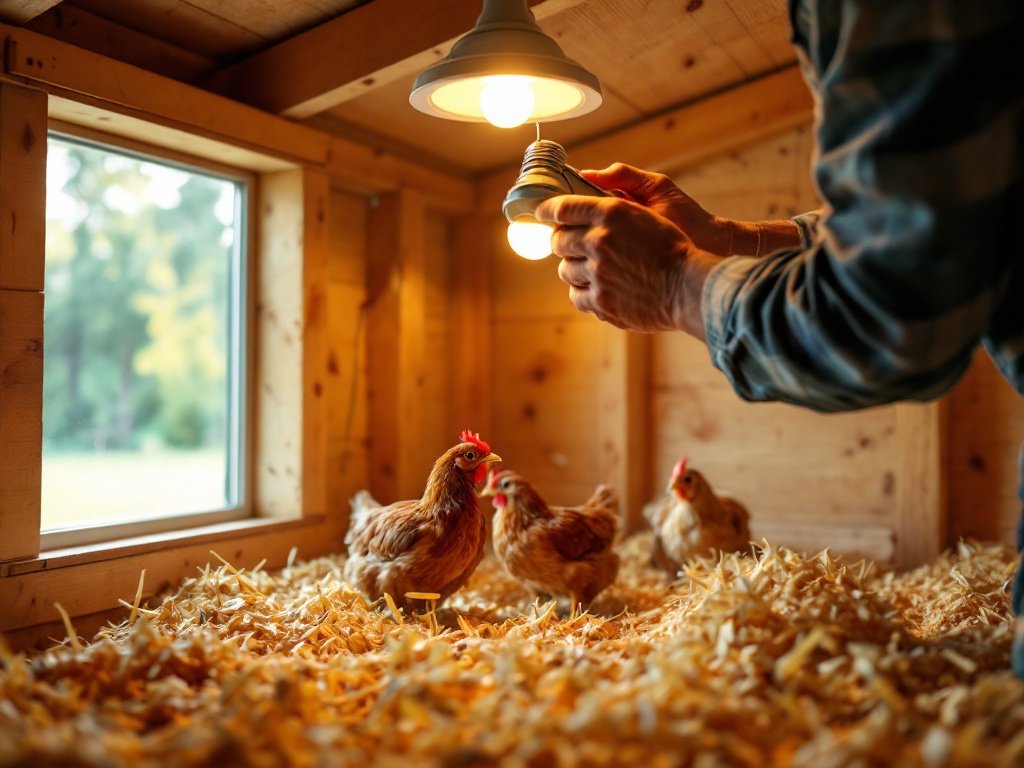
Maintaining proper light intensity inside your coop is crucial to successful winter egg production. The recommended range is about 10–20 lux, measured at the birds’ perch height. You can measure this using an inexpensive lux meter or a reliable phone app. If light is too dim, hens’ reproductive cycles slow. If it’s too bright, it may make birds restless or stressed. Experiment with hanging height until you hit that 10–20 lux “sweet spot”—this really does make a difference in egg output and hen behavior.
For best results, combine even, warm-white lighting with draft-free shelter. If building or upgrading your winter coop, see our guide to a winter chicken coop for design tips.
Using a Coop Light Timer: Timing and Schedules That Work
The most reliable way to provide consistent supplemental lighting is with a quality coop light timer. Here’s how to set it:
- Determine your local daylight hours in the heart of winter.
- Set your coop light timer to turn on 1–2 hours before sunrise.
- Set the timer to turn off 1–2 hours after sunset, or adjust morning/evening split as needed.
- Goal: Give your hens a total photoperiod of 14–16 hours every day.
- Test the timer program several times to ensure accuracy, especially after power outages or daylight saving changes.
Many basic timers lose their settings after outages or may skip cycles if not programmed for every day of the week. Pay more up front if you must—it’s cheaper than troubleshooting missed egg days. For security, consider pairing with an automatic coop door opener for a fully automated winter routine.
Power and Cost Estimates: What Will You Spend (and Save)?
LED coop lights are energy misers. Average daily electricity use is around 0.1 kWh, translating to roughly $10–$12 for a full winter’s use at typical U.S. rates. That’s the same cost as a couple cartons of store eggs, but gets you fresh, home-laid eggs all winter. Most keepers see egg production increase by 15–30% over flocks left in the dark—an ROI that pays for itself even in a small flock. When weighing this investment, remember that a reliable setup also reduces stress on your birds, which pays off with healthier hens come spring.
To cut hidden costs, pair your LED light with other winter essentials like a heated chicken waterer and draft-free coop bedding.
Common Problems and How to Avoid Them
Even the best LED coop light won’t fix programming mistakes, hardware failures, or placement errors. Here’s what can go wrong and how to avoid disaster:
- Timer Glitches: Many users report timer programming errors after power outages, resulting in missed cycles or light never coming on. Use a digital timer with backup battery or integrated memory.
- Overheating Risks: Cheap plastic housings and bare bulbs can overheat and melt bedding or wiring—worse in small or unventilated coops. Always mount above bedding, away from dust, and avoid exposed hot bulbs.
- Premature Failures: Bargain-priced plastic LED fixtures tend to die early, leaving you troubleshooting during the coldest, darkest part of the year. Stick with products rated for outdoor or animal use.
For more on coop safety and predator protection, check predator proof chicken coop.
Quick Comparison: Top Chicken Coop Lights for Winter (with Specs)
| Product | Lumens | Wattage | Color Temp (K) | Timer | Lifespan | Cost (Approx.) |
|---|---|---|---|---|---|---|
| Bare-Bulb LED (generic) | 400–600 | 5–8 W | 3,000–4,000 | External timer | Up to 25,000 hrs | $10–$30 |
| Integrated Fixture with Timer | 700–800 | 8–10 W | 2,700–3,000 | Built-in digital | Up to 50,000 hrs | $30–$80 |
| Weatherproof “Coop” LED Panel | 600–750 | 6–10 W | 4,200–5,000 | External or built-in | 25,000–50,000 hrs | $30–$50 |
For more detailed operational advice or when building out a coop, see tips on coop bedding and coops for 6 chickens.
FAQs: Maximizing Winter Egg Production with Safe, Effective Lighting
How many hours of light do my hens need for winter egg production?
Hens need about 14–16 hours of total light each day in winter for consistent laying. Use supplemental LED coop light in combination with natural daylight to reach this photoperiod.
What’s the safest type of chicken coop light for winter?
LED coop lights are the safest. They run cool, last longer, and are less likely to overheat bedding or wiring. Choose fixtures with a weather-resistant housing and skip hot incandescent or halogen bulbs.
How much will it cost me to run a coop light all winter?
The average cost is about $10–$12 for a winter season, based on a 5–10W LED used 14–16 hours per day. Check your local electricity rates for a precise estimate.
How bright should the coop be? How do I measure it?
Aim for 10–20 lux measured at perch height. Use a lux meter or mobile app, and adjust bulb height as needed. Too little or too much light can reduce egg production or stress your birds.
What timer schedule should I use for my coop lights?
The best approach is to start the light 1–2 hours before sunrise and continue 1–2 hours after sunset, ensuring a total of 14–16 hours of light each day.
Conclusion
Smart supplemental lighting is the practical, science-backed way to keep eggs flowing in cold months. Choose the best chicken coop lights for winter with warm, even LED output, a reliable timer, and a focus on measured light levels where your hens roost. Watch your winter egg basket grow—safely and affordably—while sidestepping common mistakes. Ready to upgrade? Check your coop lighting and give your hens the season-proof routine they deserve.
Don’t forget to explore our essential guides like best chicken coop for cold weather and best heated chicken waterer to round out your flock’s winter toolkit.
—