
As an Amazon Associate we earn from qualifying purchases. This article contains affiliate links; we may earn a small commission at no extra cost to you.
Diatomaceous earth for chickens is a hot topic in backyard poultry circles, promising a natural solution for mites and lice—yet owners face confusing labels, safety questions, and mixed results. If you want real, practical guidance instead of overhyped claims, read on. This hands-on guide cuts through the myths and tells you what actually works in small poultry flocks, with critical facts on misuse, overlooked long-term risks, and when an alternative approach is better.
Key Takeaways
- food-grade diatomaceous earth is the only safe choice for chickens, but improper use causes health risks and disappoints many owners.
- Dust baths with DE can create clouds that irritate birds and humans, with inconsistent parasite control results.
- Integrated natural methods often beat plain DE—consider herbal powders, predatory mites, and probiotics as safer, effective strategies for poultry health.
- What Is Diatomaceous Earth and How Does It Work for Chickens?
- Choosing the Right Diatomaceous Earth: Grades, Particle Size, and Pricing
- Real-World Challenges: Misuse, Owner Complaints, and Risks of DE in Chicken Dust Baths
- Health and Safety Concerns: What Every Chicken Owner Must Know
- Overlooked Realities: What Competitors Don’t Tell You About DE for Chickens
- Practical Alternatives and Integrated Strategies for Mites and Lice Control
- Conclusion: Should You Use Diatomaceous Earth for Your Chickens?
- FAQ
What Is Diatomaceous Earth and How Does It Work for Chickens?
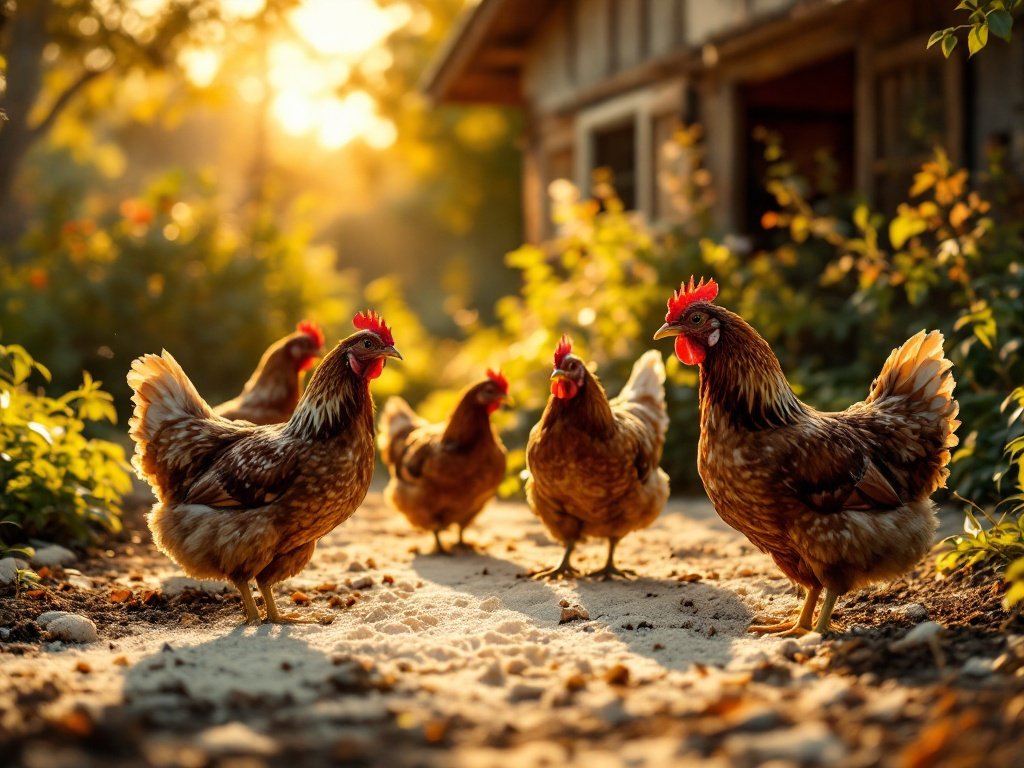
Diatomaceous earth (DE) is a naturally occurring powder made from fossilized diatom shells and is composed mainly of silica. In poultry care, diatomaceous earth for chickens is promoted as a natural parasite control method—especially for lice and mites—because its tiny, sharp particles can damage insect exoskeletons. When dry, these fine particles absorb lipids from parasites’ shells, causing the pests to dry out and die. However, only food-grade diatomaceous earth with less than 1% crystalline silica and particle sizes between 5 and 50 microns is considered safe for poultry. Filter-grade DE, which contains higher crystalline silica (5-10%) and larger particles, is not safe and should never be used in chicken environments (source).
It’s critical to keep in mind that moisture destroys DE’s effectiveness. When it gets damp, it clumps and stops acting as a desiccant, making it useless for parasite control.
Many owners view DE as easy and “all-natural,” but results can vary widely according to climate, application practices, and quality of the product (source).
Choosing the Right Diatomaceous Earth: Grades, Particle Size, and Pricing
Selecting the correct grade of diatomaceous earth for chickens is non-negotiable. There are two main grades:
- Food-grade diatomaceous earth: Contains under 1% crystalline silica; particle size is fine (5–50 microns); safe for chickens when used with care. Sold in small to bulk bags, with prices vary by brand, package size, and retailer.
- Filter-grade diatomaceous earth: Contains higher crystalline silica than food-grade products and should not be used in animal settings. Packaging and pricing are similar to food-grade, but filter-grade is slightly more expensive for similar volume (source).
Mislabeling is a real problem. Some products sold as “feed-grade” or in garden sections may in fact be filter-grade, so always check labels for “food-grade” status and verify particle specs. Never use pool or filter DE for chickens.
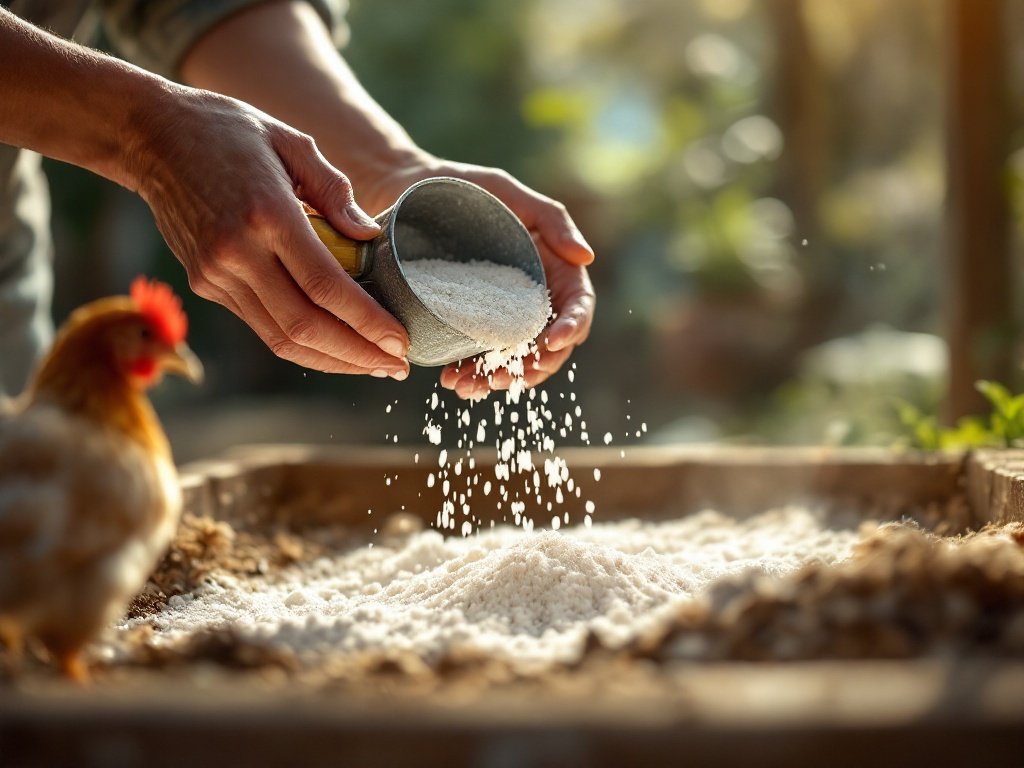
Check that your DE is dry, not clumping in the bag, and avoid material with visible grit. For backyard operations, 5- to 25-lb packages offer good value for seasonal use, but always store in sealed containers to avoid moisture absorption.
If you want extra peace of mind, stick to brands that are widely reviewed by chicken owners and endorsed by poultry forums.
Real-World Challenges: Misuse, Owner Complaints, and Risks of DE in Chicken Dust Baths
Most chicken owners try diatomaceous earth for chickens by adding it to chicken dust bath areas or sprinkling it in the coop. While this can look promising at first, complaints are common:
- Dust clouds from DE applications are irritating for both humans and birds. Many owners (especially those with respiratory sensitivities) report coughing fits and immediate discomfort.
- Chickens often avoid heavily dusted baths. Excess DE makes the dust bath unappealing, and smarter birds steer clear altogether.
- DE quickly loses effectiveness once it absorbs humidity—its parasite-killing action stops when clumped or wet (source).
- Mite and lice control is inconsistent, even with frequent, heavy DE application. Owners may see no improvement after several weeks or cycles (source).
- Feeding DE by mixing it into dry feed creates added risks, especially when dosing is not precise.
Here’s a quick look at problems and realistic outcomes for chicken keepers:
| Problem | What Actually Happens | Practical Fixes |
|---|---|---|
| Overdosing DE in dust baths | Creates thick clouds, birds avoid baths, caretakers cough | Use a light dusting; always mix with sand or ash |
| Applying DE when damp/humid | DE clumps, efficacy drops to zero | Keep DE and dust baths dry and under cover |
| Using filter-grade DE | Raises health risks, provides no benefit | Double-check labeling and only buy food-grade for poultry |
| Long-term use in feed | Can impact bone development and eggshell quality | Do not feed routinely or in large amounts |
For safer, more effective multi-season use, pair DE with other natural controls and always apply in open air away from wind or flocks.
Health and Safety Concerns: What Every Chicken Owner Must Know
While food-grade diatomaceous earth is safer than filter-grade, it is not risk-free. Inhalation of its silica particles (even “low-crystalline” forms) can scar the highly sensitive lung tissue of birds. In humans—especially children, the elderly, and those with asthma—its dust poses a real risk of lung irritation or worse (source).
Regulations are inconsistent: DE is not formally approved for use directly on animals or in animal housing in many countries. For feed, its recognized use is as a small anti-caking agent, not for parasite control or routine supplementation.
Key safety guidelines for poultry health:
- Never allow birds (or kids) to disturb clouds of dry DE dust—apply in very thin layers, in wind-free, dry weather.
- Avoid direct feeding unless advised by a vet and never overdose.
- Remove and discard any DE that has become damp or clumpy quickly.
- Wear a dust mask and gloves for handling, especially if you have allergies.
For ideas on other coop bedding solutions that reduce dust and maintain odor control, see our guide to best chicken coop bedding.
Overlooked Realities: What Competitors Don’t Tell You About DE for Chickens
Most marketing ignores these long-term risks and limitations:
- Chronic exposure: Repeated low-level silica exposure may harm bone development and eggshell quality over months. These impacts are rarely screened in backyard flocks.
- Humidity and particle size: Not all DE works the same—fine DE in dry climates is more potent, but becomes useless in humid barns or outdoor coops. Oversized or clumpy DE loses contact with mites quickly.
- Integrated approaches work better: Data suggests combining natural parasite control methods—like predatory mites, herbal powders, or targeted sprays—produce more reliable, economical results, especially over several flock cycles.
For a comparison of dust baths, integrated parasite control, and hardware solutions, check out our guides on winter chicken coops and hardware cloth for chickens to reduce mite entry.
If you want to know if herbal powders or releasing predatory insects is right for your set-up, see the next section. Real effectiveness depends on your unique flock, climate, and management habits.
Practical Alternatives and Integrated Strategies for Mites and Lice Control
Serious parasite outbreaks rarely have one easy solution. Many small-scale keepers have found more success by mixing and matching several methods for natural parasite control:
- Herbal powders: Products made with dried herbs (like mint, thyme, or lavender) can deter mites with less dust and better long-term safety. Owners often mix these in dust baths or nesting boxes.
- Predatory mites: Specially-raised mites harmless to chickens but deadly to pest mites can be introduced into the coop. This technique offers a chemical-free, self-sustaining approach, though results may take weeks to show.
- Probiotic sprays: Some commercial products or DIY solutions use live beneficial bacteria that outcompete pests in the chicken’s environment and on skin, with no dust or silica exposure.
Side-by-side farm case studies suggest that tracking flock parasite loads, health metrics, labor, and per-bird costs over a few production cycles produces a fairer comparison than one-off trials. Many owners report that integrated natural methods outperform DE alone over time and help promote strong, resilient birds.
To make your own integrated action plan, check our tips on draft-proofing your coop, no-waste feeders for feed efficiency, and nesting boxes for cleaner egg production.
Conclusion: Should You Use Diatomaceous Earth for Your Chickens?
Diatomaceous earth for chickens is only as effective as its application. If you choose DE, opt strictly for food-grade, apply in minimal amounts to dry dust baths, and store securely—never overfeed or use damp. Know that risk of lung irritation, bone and eggshell impact, and inconsistent parasite control makes it less than a miracle cure.
Real-world evidence suggests that backyard flocks thrive best with an integrated approach—combine regular dust bathing with alternative natural controls and prevent pests through coop management, not just DE dusting. Always put poultry health and safety first.
Want more flock care solutions? Explore our top picks for small chicken coops and problem-solving egg guides. Have you tried integrated methods or unique alternatives to DE? Share your experience below!
FAQ
Can I use diatomaceous earth for chickens in the nest boxes?
Very lightly dusting nest boxes with food-grade DE may deter some pests, but overuse leads to dust inhalation for both birds and people collecting eggs. Safer to use herbal mixes or regular cleaning.
Does adding DE to chicken feed prevent worms?
There is no conclusive evidence that feeding diatomaceous earth for chickens effectively prevents or treats internal parasites. Overfeeding DE can cause digestive or bone health issues. Always consult a poultry vet first.
What are the main dangers of DE for poultry health?
The biggest risks are inhaling the fine dust (which may scar lungs), and possible negative impact on bone and eggshell formation if overdosed in feed. Never use filter-grade or apply in heavy, enclosed spaces.
Is diatomaceous earth safe for chickens if chicks or humans are present?
Dust clouds are especially risky for chicks, children, and the elderly. Always apply outside in dry, wind-free weather, and use a mask whenever possible. Consider non-dusty alternatives if younger or sensitive individuals are present.
Can I use pool or filter-grade DE for chicken pest control?
No, never use pool or filter-grade diatomaceous earth around chickens or their environment. Only food-grade DE is even potentially safe, and always with proper caution.
Sources
- Center for Ingredients Safety: Safety Assessment of Diatomaceous Earth as Used in Cosmetics
- CDC/NIOSH: Amorphous Silica
- OSHA: Labeling requirements for Diatomaceous Earth
- Healthline: Diatomaceous Earth Uses, Benefits, and Safety
- WebMD: Diatomaceous Earth Health Benefits and Uses
- PF Harris: Food Grade Diatomaceous Earth