
As an Amazon Associate we earn from qualifying purchases. This article contains affiliate links; we may earn a small commission at no extra cost to you.
Solar panel kit for chicken coop systems have become an essential investment for backyard poultry keepers who want real off-grid power with winter reliability, quantified payback, and peace of mind for flock safety. This 2026 buying guide cuts through generic advice, delivering real specs, current prices, must-have safety features, and why load-matching, battery chemistry, and weather-proofing matter for serious DIYers.
Key Takeaways
- Top solar panel kits for chicken coops in 2026 pair 50–80W monocrystalline panels with 20–100Ah batteries and MPPT controllers, delivering reliable off-grid power year-round.
- Load sizing, cold-weather battery derating, and safety features like obstruction sensors and manual overrides are critical for flock safety and long-term performance.
- Expect a realistic investment of $250–$450 for a complete setup, with any available rebates or credits may vary by location and program, and payback depends on local electricity rates, outage frequency, and system size when reducing grid reliance.
- What Makes a Good Solar Panel Kit for Chicken Coop Use in 2026?
- Cold Weather, Battery Chemistry, and Off Grid Coop Power: What Actually Works?
- Load Sizing Made Simple: How to Match Your Kit to Your Coop’s Needs
- Real Price Brackets and What You Get (2026 Edition)
- Safety Features and Maintenance for Worry-Free Flock Power
- Cost Breakdown, Incentives, and Long-Term ROI
- Quick Reference: Best Solar Coop Kits and Where to Buy
- Closing Tips: Avoiding Common Solar Coop Mistakes in 2026
- Frequently Asked Questions
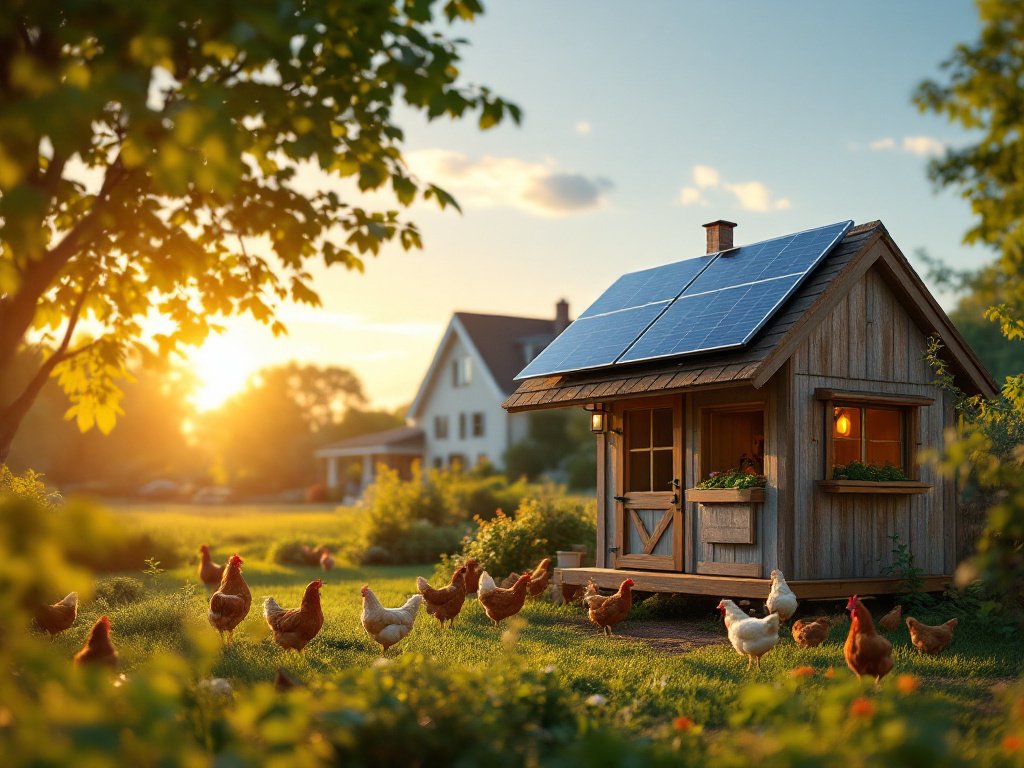
What Makes a Good Solar Panel Kit for Chicken Coop Use in 2026?
Not every “solar” kit you see online is truly designed for real backyard chicken coop use. In 2026, the best solar panel kit for chicken coop safety and peace of mind goes well beyond a basic panel and battery. It should be “coop-ready,” meaning:
- Panel and Battery Sizing: Modern kits pair high-efficiency (20–23%) 50–80W monocrystalline panels (now averaging around $0.25–$0.42/W) with 12V 20 to 100Ah off-grid battery packs—big enough to run doors, lights, and fans reliably, even during overcast winter days.
- Smart Controllers: An MPPT (Maximum Power Point Tracking) charge controller, not just a basic PWM, ensures efficient solar harvest, especially in partial shade or variable weather.
- Wide Operating Temperatures: Quality system components need to operate from at least –4°F up to 150°F with cold-resistant cabling and sealed connectors to avoid failures in extreme conditions.
- Safety and Convenience: Look for built-in safety features such as obstruction sensors on doors, low-voltage (12V) wiring for animal safety, and battery monitoring.
According to Aivituvin’s 2026 buyer’s guide and field reports from Coop Tender, kits that bundle AC, solar, and battery backup in one system are emerging as the new standard—keeping your flock secure even if there’s a streak of cloudy weather or a battery failure.
Cold Weather, Battery Chemistry, and Off Grid Coop Power: What Actually Works?
Winter is the real test for any off grid coop power setup. Most chicken keepers in cold climates quickly learn that batteries and cheap electronics falter when the mercury drops. Here’s what to focus on:
- Batteries: Many kits still use sealed lead-acid (SLA) batteries, which perform decently above freezing but drop capacity (and may fail entirely) below –10°F if not frost-rated. Modern lithium iron phosphate (LFP/LiFePO₄) batteries have better cycle life, charge faster, and resist cold—however, LFP packs may temporarily derate up to 30% below 32°F, so oversizing is wise.
- Motors and Drives: Doors with steel worm-drive actuators (as found in premium Coop Tender models) resist freezing and work reliably even well below zero, while chain or cable mechanisms are more prone to jamming in ice and snow.
- Sealed Electronics: Enclosures must be fully weatherproof and rated for unheated barns or coops—look for IP65 minimum or sealed gaskets on control boxes.
- Lifespan: Batteries in these setups usually last 3–8 years depending on depth of discharge and freeze-thaw cycles. Panels last 30 years or more.
You can read a deep dive into real-world battery performance in farm structures here. For further tips on weatherproofing your entire coop and keeping your chickens warm during winter, check out our best chicken coop for cold weather and keep chickens warm in winter guides.
Load Sizing Made Simple: How to Match Your Kit to Your Coop’s Needs
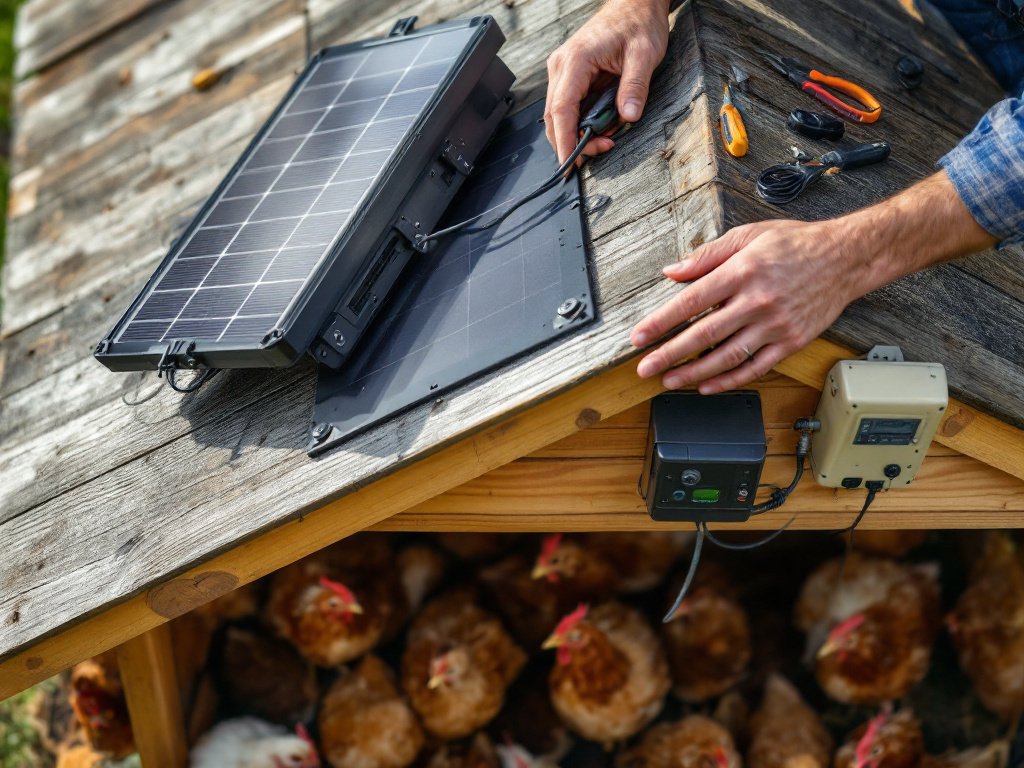
One of the biggest mistakes is confusing house-sized panels and energy calculators with what a poultry coop truly draws. Here’s how to right-size your 12v coop setup so your doors, lights, and fans never die at the wrong time.
Step 1: List every electric load in your coop (door motor, LED light, fan, water heater, camera, etc.).
Step 2: Find the wattage of each device. Door motors typically use 5–10W on standby, but up to 50W during operation for a few seconds. A small fan pulls about 10–30W; a coop-safe heater or heated waterer may use 30–500W in bursts.
Step 3: Estimate daily runtime for each load (e.g., door operates 2–4 times per day at 1 minute/run, light runs 6 hours, fan runs as needed).
Step 4: Add all watt-hours:
- e.g., Door: 10W x 1h = 10Wh (over whole day)
- Light: 10W x 6h = 60Wh
- Fan: 20W x 2h = 40Wh
- Total: ~110Wh/day
Step 5: Account for battery & weather derating. For winter, budget for a 30% capacity loss in LFP batteries—multiply your daily total by 1.3+. Factor in at least 2–3 days autonomy to survive storms or several dark days.
| Device | Typical Power (W) | Run Time/Day | Daily Consumption (Wh) |
|---|---|---|---|
| Coop Door Motor | 10 (peak 30–50W) | 5–10 min | 1–8 |
| LED Lighting | 4–10 | 4–8 hr | 16–80 |
| Ventilation Fan | 10–30 | 2–6 hr | 20–180 |
If you want more advice on optimizing your coop lighting solar setup, our winter lighting guide dives deeper.
Failing to size batteries for days of bad solar or ignoring winter derating is the main cause of flock lockouts or failed heater runs—as confirmed by real 2026 service calls.
Real Price Brackets and What You Get (2026 Edition)
Let’s be specific about the current 2026 prices and what’s bundled:
- Panels: about $0.25–$0.42/W at the module level (source), so a quality 80W panel runs around $27 retail—but panel alone isn’t enough.
- Kits with Battery & Controller: $250–$450 buys a complete solar panel kit for chicken coop with panel, MPPT controller, battery (20–100Ah), and all mounting hardware.
- Top Brands: Aivituvin kits ($299–$449) bundle solar, battery, and AC backup in one smart unit. Coop Tender models ($250–$380) add steel worm-drive and sealed SLA batteries, plus WiFi integration.
- Install Time: Most DIY users report 2–3 hours to finish the project—simply follow logical cabling and bracket instructions.
- Warranty Periods: Panels carry 30-year warranties, batteries usually last 3–8 years, and most inverters/controllers are warrantied for 5–10 years. Double-check before you buy.
- Incentives: rebates and regional credits vary by location and program, so act soon if you want to save more.
While off grid coop power isn’t “cheap,” it offers very real cost stability, especially if grid outages threaten your coop or your property is far from utility power. If you’re curious about how these upgrades compare to more basic flock security or feeding strategies, check out our full posts on automatic doors and our waste-proof feeders.
Safety Features and Maintenance for Worry-Free Flock Power
With electricity crossing paths with poultry, safety must always come first. The best solar coop door power solutions in 2026 build redundancy and protection into every detail:
- Obstruction Sensors: Top kits automatically halt if a chicken, feather, or stick blocks the door, preventing injury or stressful lockouts. Kits lacking this feature are a risk.
- Manual Override: Manual backup (slide bolt or pull cable) lets you open/close the door by hand if the motor or controller ever fails—which is vital for flock safety during storms or dead batteries.
- Low Voltage: All wiring from the battery/controller should be 12V, with secure waterproof junctions. Avoid jury-rigged house extension cords.
- Battery Checks and Panel Maintenance: Clean solar panels every few weeks to clear dust or snow; check battery terminal tightness and charge health at every season change.
- Fail-Safe Wiring: Use chicken-proof conduit or armored cable especially if rodents or curious birds peck at loose wires. Poorly protected wires cause shorts or—even worse—coops without power.
If you’re troubleshooting lighting or energy problems, our DIY guide to essential chicken coop accessories has more maintenance and safety info.
Cost Breakdown, Incentives, and Long-Term ROI
The biggest reason to invest in a solar panel kit for chicken coop use is the long-term return, not just the cool factor. Here’s what to expect from a numbers standpoint:
- Initial Cost: Expect $250–$450 for a complete panel, controller, and battery setup in 2026, with the bulk of cost in the battery (and upfront wiring).
- Maintenance and Replacement: Battery replacement every 3–8 years (plan on reinvesting $60–$150 for a typical 20–60Ah LFP), with minor maintenance for cleaning and tightening connections. Panels usually last well over 30 years.
- Incentives: Most 2026 solar rebates and credits expire by September 30. Check your local government’s energy website for any remaining co-op or solar poultry grants.
- Payback Time: For most small flocks reducing grid reliance, ROI is typically reached in 3–6 years (sometimes faster in regions with high electric rates or unreliable service).
For a full financial breakdown on starting with chickens, including feed, housing, and all coop upgrades, see our in-depth cost to raise chickens analysis.
Quick Reference: Best Solar Coop Kits and Where to Buy
Here’s how leading kits and component bundles compare, so you can find the best option based on your flock’s size, climate, and needs.
| Brand/Model | Panel Size & Type | Battery Type/Size | Controller | Safety Features | Unique Extras | Price Range (2026) |
|---|---|---|---|---|---|---|
| Aivituvin Automatic Door Kit | 50–80W mono / high-efficiency | LiFePO₄, 20–60Ah | MPPT | Obstruction sensor, manual override | Solar and battery backup in one | $299–$449 |
| Coop Tender Solar+WiFi | 60–80W mono / frost-rated | SLA, 20–50Ah | MPPT | Worm-drive, obstruction sensor | WiFi app, steel drive | $250–$380 |
| Run-Chicken Eternal Solar | 50–60W mono | 3rd party (not always included) | PWM/MPPT (check variant) | Basic block sensor | Minimalist all-weather case | Varies (panel only: $50–$100) |
Always order directly from the manufacturer or a proven farm supply specializing in solar projects. For deep-dive reviews and safety comparisons, sites like FlockGuide are also worth a look.
Closing Tips: Avoiding Common Solar Coop Mistakes in 2026
If you’re on your first build or looking to upgrade from DIY parts, keep these real-world pitfalls in mind:
- Over or Under-sizing: Most buyers either overspend on giant panels or buy undersized batteries that leave flocks stranded after 2 days of clouds. Use the load worksheet above to match your build—not your neighbor’s.
- Ignoring Cold-Weather Derating: Batteries in unheated sheds lose capacity fast. Failing to size for winter performance is the #1 cause of winter lockouts.
- Skipping on Safety: Always check for obstruction sensors and manual overrides. Many 2026 maintenance calls are still for jammed doors without these—entirely preventable expenses.
- Warranty Gaps: Don’t assume every panel or battery is covered equally. Double-check warranty lengths, especially if buying discount or “no name” kits.
For more tips on predator prevention, ventilation, and weather-proofing, you can also see our predator proof chicken coop guide and detailed deep bedding guide.
Frequently Asked Questions
Can I run a heated waterer on a solar panel kit for chicken coop?
Yes, but heaters draw much more power than doors or lights. You’ll need a larger battery bank (and ideally two panels) if you want reliable performance all winter. For more on keeping water unfrozen, see our heated chicken waterer guide.
How long do batteries last in a solar chicken coop setup?
Most sealed lead-acid batteries last 3–5 years, while LiFePO₄ can last 5–8 years, depending on temperature swings and depth of discharge. Panels themselves usually last over 30 years.
Will a solar panel kit work if my coop is in deep shade all winter?
Panels require a few hours of direct or filtered light to charge reliably. If you have heavy shade for months, consider mounting the panel further from the coop or use AC backup.
What’s the main difference between cheap and premium kits?
Premium kits have higher-efficiency panels, MPPT controllers, larger batteries, real winter-proof drive mechanisms, and more robust safety features. Cheaper kits may lack cold resistance and sensors, risking more downtime or even lost poultry.
Are solar coop door power kits hard to install?
Most are designed for hands-on DIYers with basic skills. Allow 2–3 hours for setup. Always follow included instructions and double-check all safety checks before connecting the system.
—