
As an Amazon Associate we earn from qualifying purchases. This article contains affiliate links; we may earn a small commission at no extra cost to you.
Choosing the right chicken coop kit with run is not just about keeping chickens contained—it’s the difference between a secure, healthy backyard flock and a coop full of regret. Many prefab and DIY backyard coop kits promise it all, but most skip crucial specs that make or break predator safety, flock comfort, and your investment.
Key Takeaways
- Focus on kits that offer real predator-proofing, quality lumber, and at least 4 sq ft coop plus 10 sq ft run per bird.
- Pricier isn’t always better—many expensive combos miss must-have features like hardware cloth, modular runs, and transparent warranties.
- Avoid top buyer complaints by scrutinizing build materials, door security, and ventilation design before you buy.
- What Makes a Chicken Coop Kit with Run Truly Secure and Livable?
- Coop and Run Combo Types: Budget, Build Time, and Features
- Top Buyer Complaints—and How to Avoid Them
- Features Competitors Miss (and You Shouldn’t)
- Benchmark Data: What to Compare Before You Buy
- Quick Reference Table: Leading Coop-and-Run Kits
- Conclusion
- Frequently Asked Questions
What Makes a Chicken Coop Kit with Run Truly Secure and Livable?
Not all backyard coop kits are created equal. For real security and healthy birds, a chicken coop kit with run must deliver on these specs:
- Space per bird: At least 4 sq ft of coop floor area per bird and 10 sq ft of run space per bird. This means a 4-bird flock needs about 8 ft × 4 ft of indoor floor, plus a 10 ft × 8 ft covered run, preventing crowding, stress, and disease (source).
- Construction materials: Look for pressure-treated or cedar lumber. All framing and hardware should have a water-resistant finish, while floors should be rot-resistant or concrete. Avoid softwoods and unfinished plywood that rot quickly (source).
- Predator-proofing: Only ½-inch hardware cloth—not chicken wire—should cover every window, vent, and run panel. All wire mesh should have a buried L-shaped apron or run at least 12 inches underground to block digging predators (source).
- Doors: Require lockable, weather-sealed doors. Motorized options with a light sensor offer hands-free closing at night for safety (source).
- Roof and flooring: Metal or UV-protected polycarbonate for long roof life. Raised pressure-treated floors or sealed concrete slabs help with cleaning and prevent rot.
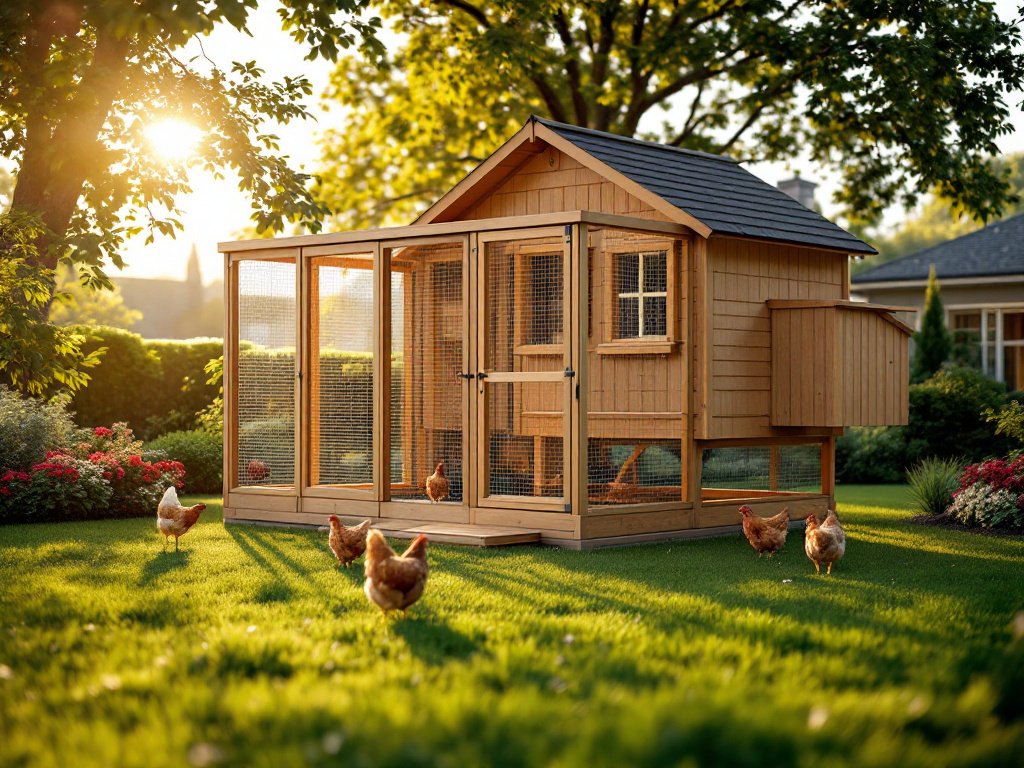
Get these right, and your flock will be safer, easier to manage, and less likely to suffer from stress or disease. For even more on predator-proofing, see our predator proof chicken coop guide.
Coop and Run Combo Types: Budget, Build Time, and Features
Not all coop and run combo kits are priced (or built) equally. Here’s what typically separates a budget prefab chicken coop from the premium walk-in combos serious keepers rely on:
- Budget tier ($300-$500): Usually lightweight plastic or softwood, modest sizes, and limited predator protection. Great for 2–3 hens, but usually lack buried mesh, strong locks, or heavy-duty roof panels (source).
- Mid-range ($800-$2,000): Typically use decent lumber, full hardware cloth runs, and larger size. You’ll often get better hardware, weather protection, and tidier assembly. Many ready-to-assemble kits fall in this category.
- Premium ($2,000+): Usually Amish-built hardwood or advanced modular systems. Options often include automatic doors, walk-in access, multi-section runs, and lengthy warranties.
Assembly time matters: A small kit takes about 4 to 6 hours for an experienced DIYer. Larger or walk-in prefab chicken coop kits can take 1 to 2 days with a helper. Save time and frustration by checking if pre-drilled holes, labeled panels, and clear instructions are included (source).

Want to see how run upgrades stack up? Our deep dive on the best chicken run upgrades details extra cover options for all climates.
Top Buyer Complaints—and How to Avoid Them
Many new owners are blindsided by weak points in their coop with attached run. Avoid these common sources of frustration:
- Poor predator protection: Kits that rely on thin chicken wire are easily breached by raccoons, foxes, or stray dogs. Always verify that hardware cloth is used throughout.
- Weak doors and latches: Jammed doors, sticky frames, or low-grade locks are some of the most frequent buyer issues. If left unchecked, this is a security risk—see our guide on the automatic coop doors for upgrade options.
- Wood rot or warping: Unsealed or untreated wood soaks up moisture, leading to rapid deterioration. Confirm that panels are sealed or caulked, especially where they contact the ground.
- Undersized space: Many kits are “optimistically rated”—advertised for more chickens than they can realistically support. Always triple-check square footage. Use our coop space requirements calculator for peace of mind.
- Assembly headaches: Complaints often mention missing hardware, unclear instructions, or mismatched panels. Read buyer reviews for red flags about difficult builds before you commit.
| Pitfall | What to Check | Quick Fix |
|---|---|---|
| Flimsy door/latch | Open/close doors in person if possible before purchase, or check multiple buyer photos | Weak doors and latches |
| Low-grade mesh or chicken wire | Confirm hardware cloth is listed everywhere, not just in “features” bullet points | Add aftermarket hardware cloth around base and vents |
| Rot-prone wood | Is wood pressure-treated or cedar? Are all ends/edges sealed? | Weatherproof with non-toxic paint/sealant |
| Vague sizing | Always check floor plan diagrams against stated “bird capacity” | Use trusted size guides |

Features Competitors Miss (and You Shouldn’t)
Most prefab chicken coop kits focus on the basics—but plenty of “premium” options skip features that save headaches in real suburban backyards:
- Adjustable predator-proof ventilation: Unlike fixed holes or unsecured screens, adjustable vents shield birds from cold drafts while still blocking raccoons and rats.
- Modular expandability: Many run combos make future expansion a real pain. Look for run panels or nest box add-ons that connect with NO need to rebuild. This is essential as your backyard flock grows.
- Transparent warranty and support info: If the manufacturer won’t share their warranty details or spell out who pays return shipping, walk away. Before buying, request written warranty and support contacts (source).
To dig even deeper into smart airflow, see our chicken coop ventilation guide.
Benchmark Data: What to Compare Before You Buy
Make apples-to-apples decisions by checking these key specs for any backyard coop kit:
- Exact launch and revision dates (newer models often fix old flaws)
- Material specs (lumber type, mesh gauge, roofing material)
- Real square footage per bird (both coop and run areas)
- Documented build time for size (ask for customer photos or videos)
- List price at launch and real current price (watch for artificial “sales”)
- Warranty length and what’s actually covered (and any exclusions)
- Predator-test certifications or video demonstrations
- Customer service ratings—look for brands that respond and ship replacement parts quickly
Pro comparison shoppers often print or copy these data points into a spreadsheet. Our detailed guide on best budget chicken coop options breaks down these points for real kits under $500.
Quick Reference Table: Leading Coop-and-Run Kits
Below is a snapshot of how top coop and run combo kits on the market actually compare on the metrics above. Use this table as a checklist alongside manufacturer specs and buyer reviews.
| Brand | Space per Bird | Material | Predator-Proofing | Build Time | Warranty | Expandable? |
|---|---|---|---|---|---|---|
| SnapLock Large Urban Coop | 4 sq ft / 10 sq ft run | Plastic & steel mesh | Solid: hardware cloth, buried mesh apron | ~4 hours | 2 years | Limited—run extensions available |
| Omlet Eglu Cube w/ Run | 3.5 sq ft / 10+ sq ft run | Double-walled plastic, powder-coated steel | Very strong, includes skirt | ~5 hours | 2 years | Highly modular |
| OverEZ Large Chicken Coop Kit | 4 sq ft / 10 sq ft run | Treated lumber, metal roof | Hardware cloth, raised base, strong latches | ~6 hours | 5 years | Yes: run extension kit |
| Henton Ranch Walk-In Deluxe | 5+ sq ft / 10-15 sq ft run | Amish pine, metal roof | Premium mesh, lockable doors, concrete pad compatible | 1-2 days | 7 years | Yes: modular panels |
Remember: actual user experience still matters most. Read owner reviews and join backyard chicken forums to get feedback on the real-world durability of these coop and run combo kits. Explore top setup options at our best chicken coop for 6 chickens guide.
Conclusion
No matter your budget, the key to a safe, low-stress flock is an honest look at what each chicken coop kit with run truly delivers. Never sacrifice hardware cloth, secure doors, or proper coop and run size—these are non-negotiable. Modular expandability and clear warranty support set the best backyard coop kits apart. Always check review photos and require real specs, not just glossy marketing. Ready to protect your flock and stop worrying at night? Chicken coop kit with run shoppers who do their homework and prioritize what really matters get years of healthy birds, secure eggs, and less hassle.
Explore our related guides for more tips on coop door security, bedding and odor control, and how to deep clean your coop. Don’t wait—protect your flock and upgrade your backyard setup today!
Frequently Asked Questions
How much space should I allow per chicken in a coop and run combo?
Industry recommendations are at least 4 sq ft of interior coop space per chicken, plus 10 sq ft of covered run space per bird. Always check your kit’s real floor plan measurements, as claimed ratings often overpromise.
Can I expand a prefab chicken coop kit with run later if my flock grows?
Some modular systems allow run and nest box expansions, but many budget kits do not. Look for brands advertising add-on compatible panels or run section upgrades to grow with your flock.
What’s the best way to protect chickens from digging or climbing predators?
Install a buried hardware cloth apron (an L-shaped barrier 12 inches into the ground) around the run perimeter. Confirm your kit includes this or plan to add it during installation. Avoid relying on chicken wire, which common predators can chew through.
Do automatic coop doors really help with security?
Automatic doors close at dusk reliably, protecting your flock from night predators when you’re away or busy. Just ensure your chosen kit or add-on uses a secure latch and is weather-rated for your climate.
How do I tell if a kit really uses hardware cloth instead of chicken wire?
Reputable brands will list “hardware cloth” in their feature specs and, ideally, show close-up photos of the mesh. If in doubt, ask for details—never accept generic “wire” or “galvanized mesh” as enough.