
As an Amazon Associate we earn from qualifying purchases. This article contains affiliate links; we may earn a small commission at no extra cost to you.
Best hawk deterrent for chickens is a topic every poultry keeper eventually confronts. Hawks strike quickly, and a flimsy solution leads to losses, heartbreak, and wasted money. Here, you’ll get a practical breakdown of what truly works, what fails, and how to choose a deterrent based on coop size, budget, and real-world pitfalls.
Key Takeaways
- Netting is the most reliable way to protect chickens from hawks, but it is costly and has its own maintenance issues.
- Quick fixes like decoys or reflective tape are cheap and easy, but lose effectiveness rapidly as hawks adapt.
- True cost and success rates depend on coop size, weather exposure, and how thoroughly deterrents are installed and maintained.
- Why Protecting Chickens from Hawks Requires More Than Scare Tactics
- Comparing the Main Hawk Deterrents—What Really Works?
- How Do Costs and Installation Times Scale by Coop Size?
- Durability and Failure—What Most Guides Don’t Tell You
- Evidence Gaps in Top-Ranking Hawk Deterrent Advice
- Choosing the Best Hawk Deterrent for Your Situation—An Expert Checklist
- Frequently Asked Questions
Why Protecting Chickens from Hawks Requires More Than Scare Tactics
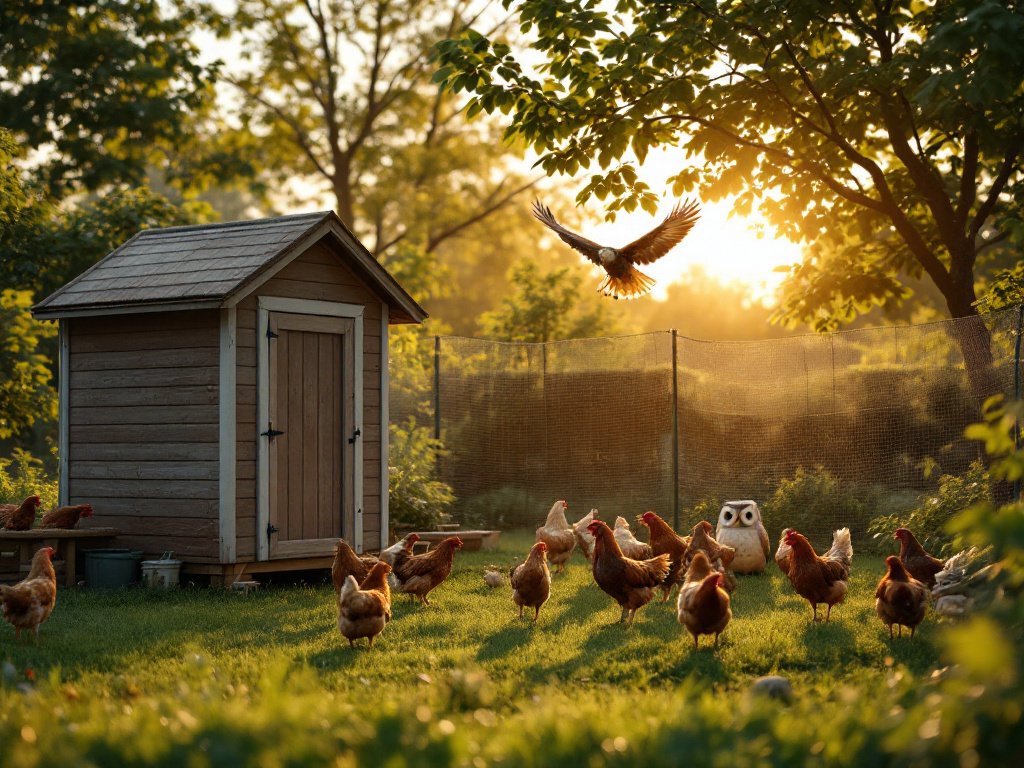
Hawk attacks are a top concern for backyard and small farm chicken keepers. Predation from hawks happens suddenly and often targets younger or free-ranging birds. While it’s tempting to grab the cheapest scare device or a flashy decoy, quick fixes rarely deliver sustained protection. Hawks quickly adapt to unmoving decoys and ignore reflective tape after repeated exposure.
To truly protect chickens from hawks means thinking beyond scare tactics. Instead, you need evidence-based solutions that withstand time, weather, and hawk intelligence. As an example, decoys can vary in price, but their effectiveness is not reliably established for sustained hawk deterrence; birds may habituate to stationary visual devices. The right choice should weigh long-term results, ongoing labor, and the risks of system failures.
Comparing the Main Hawk Deterrents—What Really Works?
Let’s break down the four most common deterrents for protecting chickens from hawks. You’ll see upfront costs, installation challenges, and hard truths about what can go wrong.
1. Hawk Netting
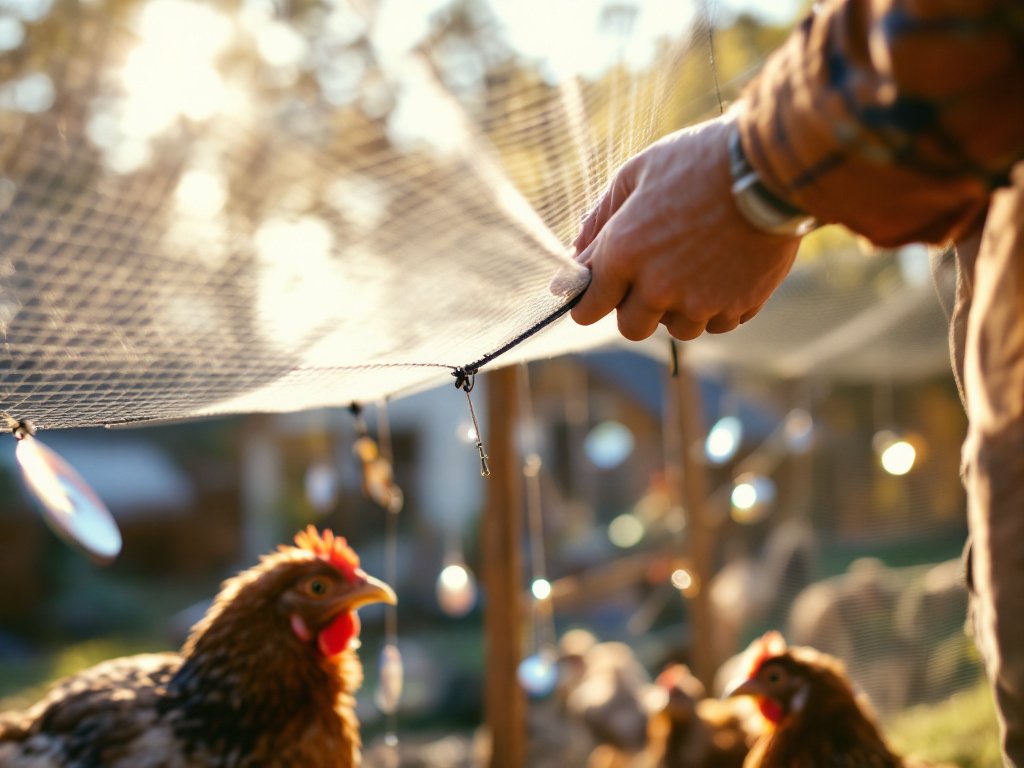
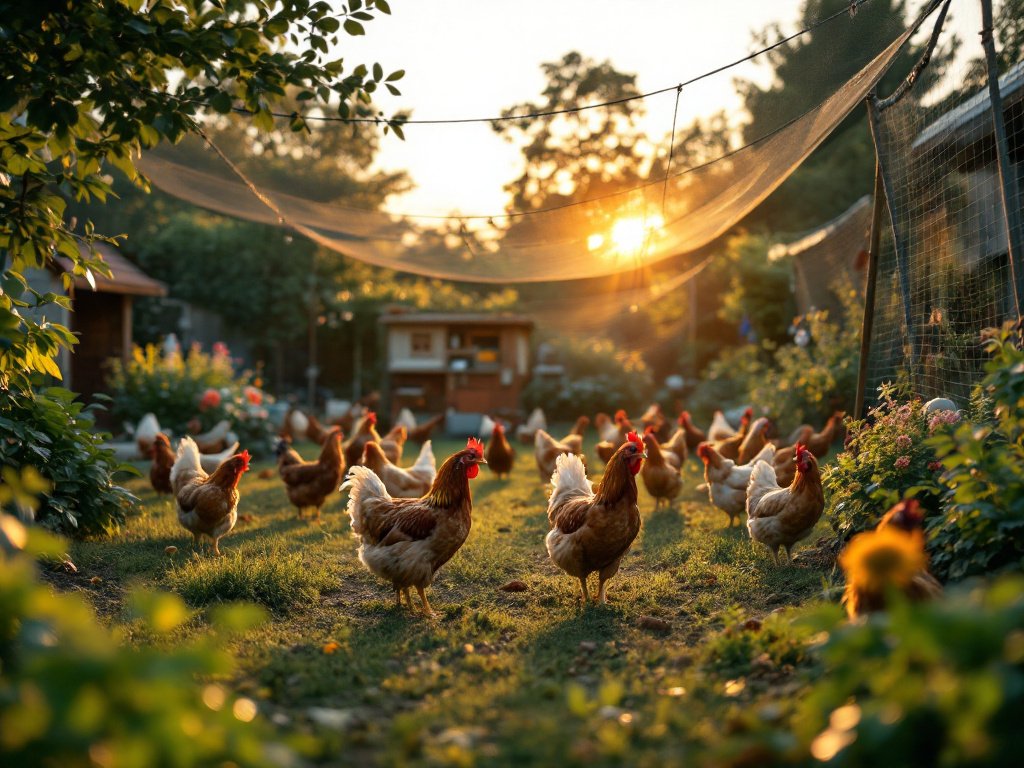
Netting is regarded as the best Hawk Netting for chickens because it offers a physical, not just a psychological, barrier. Heavy-duty nylon mesh is common, typically in ½ to 1-inch openings. Install it tightly overhead and around coop runs. According to American Vineyard Magazine and user reviews here, heavy-duty netting offers season-after-season reliability when tensioned and anchored well.
- Strengths: High reliability when installed properly, can exclude hawks from the covered area when properly installed.
- Weaknesses: High initial cost, requires careful installation. Susceptible to tears and sagging.
- Cost for small coops (under 100 sq ft): The amount and cost of netting depend on the run’s dimensions and the product selected; retail examples of 50-by-50-foot netting cost roughly tens of dollars to under $100. Installation can take a few hours.
- Read more tips on predator-proofing your chicken coop.
2. Predator Decoys
Predator Decoys are common but only moderately effective. Initial setup is a breeze, but hawks learn quickly. Decoys are most effective if you frequently move them and swap styles. As research notes, effects can diminish as birds habituate, but the timing varies and is not reliably established.
- Strengths: Low up-front cost ($10-$200), quick to buy and set up.
- Weaknesses: Hawks adapt in days. Sun and rain degrade models. Routine moving needed.
- Combine with other tools, but do not rely on decoys alone for lasting safety.
3. Reflective Tape for Chickens
Reflective Tape (scare tape, holographic strips) flashes in the sun to spook hawks. It’s inexpensive ($5-$30 per roll for 100-1,000 feet) and easy to install, but wind and sun quickly take their toll. According to multiple sources, the tape often needs replacement after a single season. See more on reflective deterrents.
- Strengths: Cheap, quick installation, fun for temporary uses.
- Weaknesses: Degrades with UV, gets tangled/worn in wind, effectiveness drops as hawks acclimate.
- Best as a temporary or supplementary measure.
4. Electric Poultry Netting
Electric Poultry Netting uses a mesh that delivers a mild shock if touched. Priced at $2-$4 per foot, these systems combine physical exclusion with an animal deterrent. However, electricity brings its own headache: outages, shorts from moisture, and regular maintenance.
- Strengths: Adds protection against other predators, can be quickly set up in smaller spaces.
- Weaknesses: Needs power, vulnerable to outages and climate exposure, wire breaks in strong winds.
- Can be used in tandem with other deterrents. For more electric poultry netting pros and cons, visit this guide.
How Do Costs and Installation Times Scale by Coop Size?
The best hawk deterrent for chickens depends on coop size, local climate, and your budget. Here’s how costs and complexity change across small, medium, and large operations.
| Deterrent | Small Coop (under 100 sq ft) |
Medium Coop (100-400 sq ft) |
Large/Commercial (>400 sq ft) |
|---|---|---|---|
| Hawk Netting | 50-100 ft netting $2,500-$5,000 Installed in a few hours |
200-400 ft netting $10,000-$20,000 1-2 days labor |
Reinforced mesh Up to $20k Several days installation |
| Predator Decoys | 1 decoy, $10-$200 Installed in minutes |
3-5 decoys, $30-$100 each Rotated weekly |
Motorized/large decoys, $150-$500 each Ongoing battery checks |
| Reflective Tape | 1 roll, $5-$30 Applied in minutes |
Multiple rolls Half-day setup |
Many rolls Up to half-day labor—seasonal replacement |
| Electric Netting | $100-$2,000, 2-3 hours install | $500-$5,000, 1 day | Up to $10,000, 2-3 days Requires power |
Avoid choosing purely on up-front price. Cheap deterrents for large runs lead to gaps that hawks exploit. Time and physical labor increase with size, especially when securing netting against wind load and animal pressure.
If you have a cold climate, netting and electric fencing offer year-round protection, whereas tape and decoys may need to be brought indoors during storms. For winter-proofing, don’t miss our cold weather coop guide.
Always perform a cost-benefit calculation based on the value of birds you’re protecting versus the system’s total investment and expected lifetime.
Durability and Failure—What Most Guides Don’t Tell You
Most advice skips the tough part: what actually goes wrong with hawk deterrents over time. Here’s what typical owners report after a season or two:
- Hawk Netting: Tears from wind or falling branches, sagging from snow or rain load (letting hawks slip through), and sometimes bird entanglement. If not tensioned, hawks or other predators may get in from the sides.
- Reflective Tape for Chickens: Degrades under UV sunlight, becomes brittle, and rapidly tears in high winds. Loses reflectivity after a single season, requiring regular replacement.
- Predator Decoys: Loss of realism over time (fading, warping), easy for hawks to ignore if left unmoved or if only one is used. Cheap models often topple in strong winds.
- Electric Netting: Power outages, battery drain, shorts from moisture, and wire fatigue after storms can leave flocks suddenly exposed.
Many blogs simply gloss over these issues. Physical inspection at least twice each season is a must. Build regular re-tensioning and replacement into your annual flock care schedule.
Want more balanced security? See how hardware cloth complements netting for all-around predator-proofing.
Evidence Gaps in Top-Ranking Hawk Deterrent Advice
Many popular guides on the best hawk deterrent for chickens miss three critical things:
- No multi-season field data: Most advice is anecdotal or from one-off tests. Rigorous, multi-season reports showing reduced losses by product and flock size are very rare.
- Poor durability testing: Little info is available on mean time-to-failure (MTTF) for deterrents exposed to UV, rain, wind, snow, and animal stresses.
- No scaled economic analysis: There is often no true cost-benefit breakdown matching deterrent costs, time to install, and maintenance vs. the number and value of birds protected across small, medium, and large coops.
To make an informed call, look for advice that covers total cost, required labor, and scenario-based outcomes—not just “this worked for me once.” For a deep dive on cost calculations in poultry keeping, check out our budget guide.
Choosing the Best Hawk Deterrent for Your Situation—An Expert Checklist
- Coop size: Measure your run and count overhead and side exposure before purchasing netting or tape. Small coops are easier and cheaper to protect, but don’t cut corners on coverage.
- Climate and exposure: Expect greater wear in windy or snowy environments. Choose heavy-duty netting and reinforce all corners.
- Budget: Invest in at least minimum grade netting for valuable flocks, or combine lower-cost deterrents for starter flocks as a stopgap.
- Maintenance: Factor in time for cleaning, tightening, and seasonal replacement of tape or weak netting. Battery-checks for electric netting or decoys need a routine.
- Power source (if electric): Ensure reliable, weather-sealed power if using electrified net systems.
- Layer your defenses: Use a mix—netting plus reflective tape and decoys is stronger than any one solution. Consider a monitored camera (coop camera guide) for added awareness.
- Anticipate failure: Walk your run after storms, snow, and heavy rains to check for sagging, rips, or gaps. Plan for replacing tape and moving decoys every 1-2 weeks.
Need a template to get started? Download a printable predator-proofing checklist or read more in our accessories guide.
Frequently Asked Questions
How important is it to use netting over other hawk deterrents?
Netting is the only method that physically blocks hawks from reaching your chickens. While decoys and tape can provide a temporary deterrent, netting remains the gold standard for reliable, year-round protection.
How often should reflective tape and decoys be replaced?
Reflective tape generally needs replacement after one season due to UV and wind damage. Decoys should be moved weekly and replaced or repaired as they show wear or lose realism.
Can I install hawk netting myself, or should I hire help?
Many small and medium-sized coops can be netted DIY, especially with help from another person. For large or commercial runs, hiring experienced installers can save time and ensure proper tensioning.
Does combining different deterrents work better than using just one?
Yes. Layering netting, tape, and decoys together may provide additional protection, but the combined effectiveness of these methods against hawks has not been established. Move decoys and switch up tape placement often for best results.
What’s the best hawk deterrent for chickens if I have a tight budget?
If funds are limited, use reflective tape and decoys while saving for heavy-duty netting. Rotate deterrents often and check regularly for effectiveness. Protect smaller runs and high-value birds first.