
As an Amazon Associate we earn from qualifying purchases. This article contains affiliate links; we may earn a small commission at no extra cost to you.
Looking to build a chicken run cheap but worried about surprise costs and durability? You’re in the right place. This straight-talking guide gives you full transparency—no hidden expenses, no skipped steps—so you can create a solid, secure run without draining your wallet.
Key Takeaways
- Building a chicken run from pallets and salvage can cost as little as $40, but most DIY runs run $200–$1,000 depending on upgrades and materials.
- Common pitfalls—like weak wire, bad latches, and poor drainage—increase repair costs and risk flock safety.
- Accurate pallet calculations, wire apron installation, and covering the run are vital to make your budget chicken run last and stay predator-proof.
- How Much Does It Really Cost to Build a Chicken Run Cheap?
- Step-by-Step Guide: Pallet Chicken Run Build
- Advanced Analysis & Common Pitfalls in Budget Chicken Run Builds
- Conclusion
- Frequently Asked Questions
How Much Does It Really Cost to Build a Chicken Run Cheap?
Honest numbers matter when you’re planning to build a chicken run cheap. Many kit sellers gloss over “extras,” leaving you with a much higher project cost than you planned. So, here’s what real owners and builders reveal:

A basic pallet chicken run—using free or salvaged pallets, scrap roofing, and only buying screws, hardware cloth, and maybe some wire—can be as cheap as $40. If you add features like a metal roof, gravel for drainage, insulation, or a solar light, the price for an 8×10-foot run often lands around $200. A DIY run using some new lumber and additional upgrades typically ends up in the $500–$1,000 range for standard sizes like 6×8 feet, 8×10 feet, or 8×12 feet .
On the other hand, prefab runs or coop-and-run kits start around $200 for the smallest options but go well beyond $1,000 as soon as you want a truly predator-resistant space. Many experienced chicken keepers report the average cost for a good run matches or even exceeds the cost of the coop itself—commonly around $1,500 in total run materials and upgrades . That includes all the hardware cloth, latches, covers, and floor drainage you really need for safety.
For a detailed breakdown on what goes into coop costs (including DIY labor), see this detailed comparison: Is it cheaper to build or buy a chicken coop?
Bottom line: If you’re serious about building a chicken run cheap, plan on $40–$200 for a smart salvage build, and $500–$1,000 if you want it to look sharp and last for years.
Step-by-Step Guide: Pallet Chicken Run Build
Here’s how to build a resilient, cheap chicken run using pallets. Get ready for hands-on work, careful measuring, and smart upgrades that save money long-term.
1. Gather Chicken Run Materials
- Pallets: Standard size is 48″x40″ (). The number of pallets needed depends on the layout and which surfaces you build from pallets; five 48″x40″ pallets are not enough to cover the walls, top, and floor of an 8×10-foot run; more for larger or double-layered sides.
- Hardware Cloth: Don’t skimp—1/2″ welded wire mesh is best for predator protection. Cover all windows, vents, and any open area.
- Roof Cover: Use reclaimed metal roofing, plastic panels, or even a heavy-duty tarp as a minimum. This deters hawks and keeps rain out.
- Screws & Fixings: Deck screws, exterior wood screws, metal brackets, L-plates—get plenty.
- Gate/Latch: heavy-duty gate latch. Never trust a simple hook-and-eye.
- Wire Apron: wire apron galvanized welded wire skirt around the base stops digging predators.
- Floor Drainage: Gravel or sharp sand, about 2–4 inches deep, keeps mud at bay.
- Paint or Sealant: Weatherproofing extends plank/pallet life.
2. Plan Out Sizing and Layout
For a healthy flock, a common starting point is about 10 square feet per standard-sized chicken in the run. Typical sizes:
- 6×8 ft (for up to 6 birds)
- 8×10 ft (for 8–10 birds)
- 8×12 ft (for larger flocks)
Mark out the site, check it’s level, and ensure there’s room for the coop door, people access, and cleaning.
3. Base and Wire Apron
Lay down your gravel or sand, spreading evenly. Dig a trench around the run and lay your wire apron at least 12″ out from the edge, then backfill with dirt and pack tightly for predator prevention.

4. Assemble the Frame
Set the pallets upright for side walls and secure tightly together with screws and brackets. Make sure there are no wide gaps (anything bigger than 1/2″)—plug cracks with scrap wood if needed. Add roof beams using longer pallets or 2x4s, and assemble a door frame from a sturdy pallet or wood offcuts.
5. Attach Hardware Cloth and Roof
Cover all sides and the top of your run with hardware cloth, stapling and screwing it down (don’t rely on only staples). Attach the roof panels firmly, overlapping seams for no-leak coverage. If using a tarp, tension it well and avoid water pooling.
6. Gate and Predator Locks
Mount your gate, double-check fit, and add a predator-proof latch. Regular padlocks, carabiners, or combination locks work much better than simple hooks or flip latches (smart raccoons will open those!).
7. Paint, Seal, and Inspect
Seal any exposed wood. Walk the perimeter, tugging every panel and checking for even tiny gaps—especially down low. Plug holes or reinforce weak spots before moving in your flock.
For more ideas on making your chicken run easy to clean and healthy year-round, see our resource: Best Ground Cover for Chicken Run.
Advanced Analysis & Common Pitfalls in Budget Chicken Run Builds
Trying to build a chicken run cheap can save hundreds up front—but skipping key materials, steps, or common sense often backfires. Here’s what most “cheap run” guides and prefab kits gloss over:
| Pitfall | How It Fails | Actual Repair Cost | Lasting Fix |
|---|---|---|---|
| Thin Hardware Cloth | Raccoons/weasels tear through in weeks or months | $50–$100 (for full re-fencing) | Install 1/2″ 19-gauge hardware cloth on all sides/top |
| Insecure Latches | Predators open doors/gates | $20–$50 | Use locking latches, padlocks, or carabiners |
| No Run Cover | Hawk attacks and rain pooling | $40–$100 | Roof with panels or wire mesh, angled for drainage |
| Poor Drainage/Flooring | Chronic mud, smells, foot rot | $30–$80 | Lay 2–4″ of gravel or coarse sand, add trenches if needed |
| Wrong Pallet Count/Sizing | Gaps, sloping, extra lumber runs up cost | Varies | Measure site first; use 48″x40″ calculations for all sides |
Most hidden costs in a budget run build come from skipping features up front—like hardware cloth that’s too thin, no wire apron under the frame, or not covering the top (hawks and owls kill quickly). Repairs for these mistakes commonly cost $50–$100 or more . For a much deeper analysis—including what size run best fits your flock—see Chicken Coop Space Requirements.
Good drainage is often overlooked but critical. Too little sand or skipped gravel creates lasting mud problems. Get more solutions in our guide: Fix a Muddy Chicken Run.
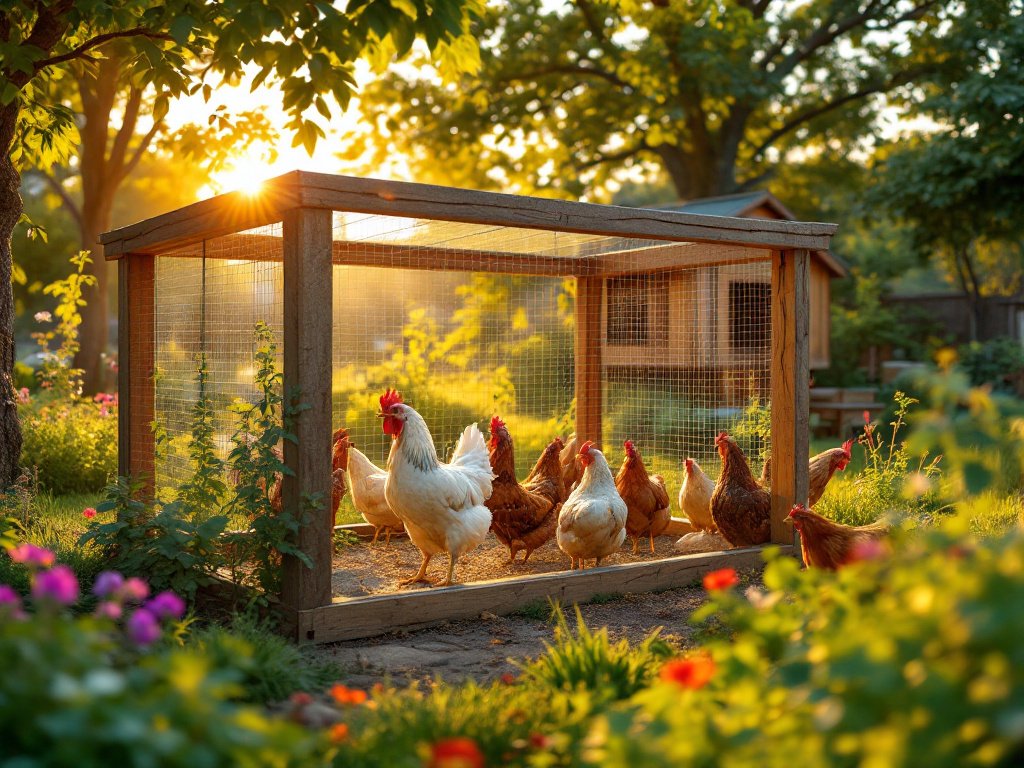
Want better predator security tips? Read: Predator Proof Chicken Coop Guide.
Conclusion
You absolutely can build a chicken run cheap—if you’re methodical, patient, and spend on what matters (hardware cloth, solid latches, drainage). Pallet-based builds can work for $40–$200, but skimping on safety or underestimating material needs can triple your costs in repairs. Use the steps above, adapt for your yard, and remember: a secure, dry chicken run pays you back for years in healthy birds and peace of mind. Ready to start? Gather your pallets, make a supply list, and build a chicken run cheap the right way. Share your photos and tips in the comments!
Frequently Asked Questions
How long does it take to build a pallet chicken run?
The time needed to build a basic pallet chicken run varies with its size, design, materials, and experience, spread over a weekend if you have help, or longer if you’re solo and new to DIY tools.
What is the best wire for a cheap chicken run?
1/2″ 19-gauge hardware cloth is best for predator security. Avoid standard chicken wire—it won’t stop raccoons or weasels.
Do I need a roof over my chicken run?
Yes—for predator safety (hawks, owls) and weather protection, every chicken run should be covered with wire mesh, metal roofing, or at least a strong tarp. See more in our Chicken Run Cover Guide.
How many pallets do I need for an 8×10 chicken run?
The number of pallets needed depends on the layout and which surfaces you build from pallets; five 48″x40″ pallets are not enough to cover the walls, top, and floor of an 8×10 run, plus extra for doors and reinforcement if needed.
How much space do chickens need in the run?
A common starting point is about 10 square feet per standard-sized chicken in the run; more space can help with flock behavior and ground conditions. More space makes cleaning and care much easier.