
As an Amazon Associate we earn from qualifying purchases. This article contains affiliate links; we may earn a small commission at no extra cost to you.
How much do chickens eat per day is one of the first (and most expensive) questions every new or frugal poultry keeper faces. Do you really know what your hens or broilers should be eating—not just what the feed bags promise? Below, you’ll find exact numbers by bird type and age, real feed costs in the U.S. and Pakistan, and the mistakes that quietly eat your flock’s profit and productivity.
Key Takeaways
- Layers typically consume 0.25–0.35 lb (about 113–159g or ½–¾ cup) feed per hen per day, while broilers reach 120–150g daily as they near market weight.
- Feed amount changes with weather, age, breed, and ranging—hot weather can reduce feed intake, but the amount varies with temperature, duration, and bird type.
- Actual feed cost per month can swing widely, mainly due to waste, hidden treats, and regional price spikes, with feed making up about 70% of the true cost of keeping chickens.
- How Much Do Chickens Eat Per Day? [Definitive Chart by Bird Type & Stage]
- What Affects Chicken Feed Amount—More Than Just the Bag
- Chicken Feed Cost Per Month: Real-World Calculations
- Top 3 Chicken Feeding Problems—and How to Avoid Them
- Beyond the Basics: Seasonal Adjustments, Feed Efficiency, and Saving Money
- Sample Feeding Schedule & Cost Table (Printable)
- Conclusion
- FAQ
How Much Do Chickens Eat Per Day? [Definitive Chart by Bird Type & Stage]
If you want eggs or fast-growing meat birds, accurate feed per hen per day is where everything starts—or goes wrong. Most backyard layer hens will eat about 100–150 grams daily (roughly 0.25 pounds), or roughly ½–¾ cup of complete pellets or mash per day, per bird [Source]. Broiler feed intake varies with age, strain, and conditions; avoid giving a single daily amount without a specified age and source, with intake rising as they approach full size [Source]. Chicks, pullets, and molting hens need smaller or adjusted rations per bird.
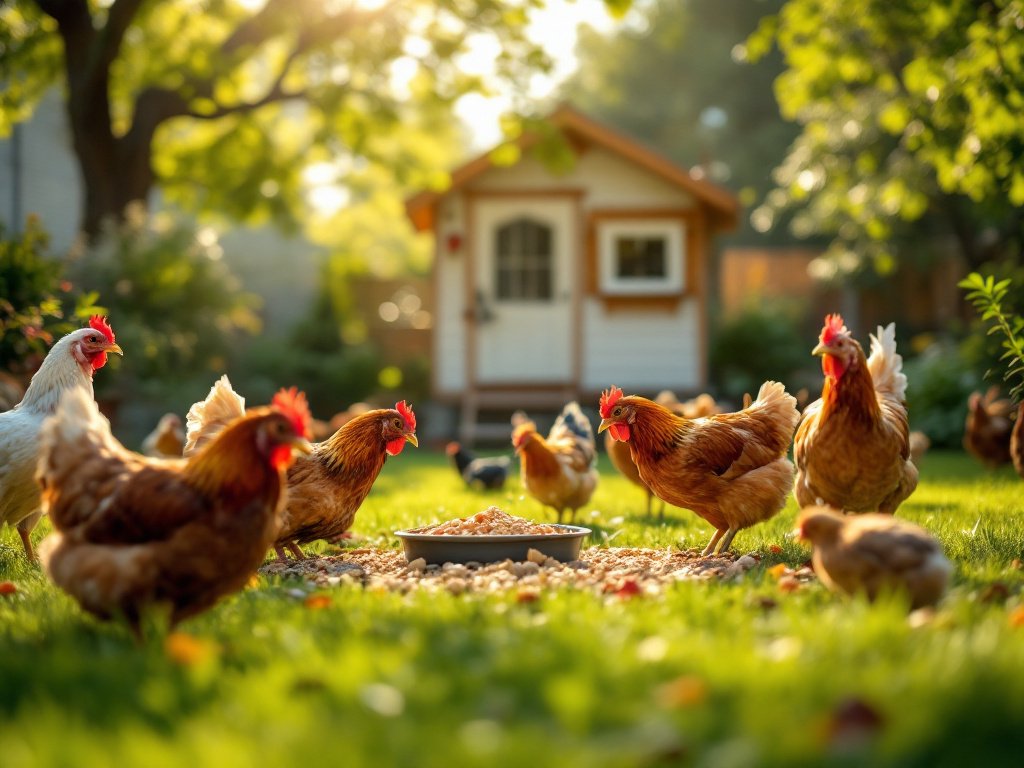
At-a-glance: Daily Chicken Feed Amount Chart (by age & purpose)
| Bird Type/Stage | Feed per Bird (g/day) | Feed per Bird (cups/day) |
|---|---|---|
| Chick (0–6 weeks) | 20–50 | ~0.1–0.25 |
| Pullet/Juvenile (6–18 weeks) | 50–80 | ~0.25–0.4 |
| Layer Hen (adult) | 113–159 | ~0.5–0.75 |
| Broiler (market age) | 120–150 | ~0.5–0.75 |
Feed requirements are for confinement or run hens. Free-range birds may need less feed depending on forage quality, but don’t skip a daily check-in on their intake.
What Affects Chicken Feed Amount—More Than Just the Bag
Chicken feed amount isn’t fixed—age, breed, production goals (eggs or meat), ranging, and even time of year all change what your birds need [Source]. Don’t be surprised if your summer feed bill drops, but so do your egg numbers—at high temperatures, chickens may eat less feed, sometimes less than usual; intake varies with temperature and bird type [Source].
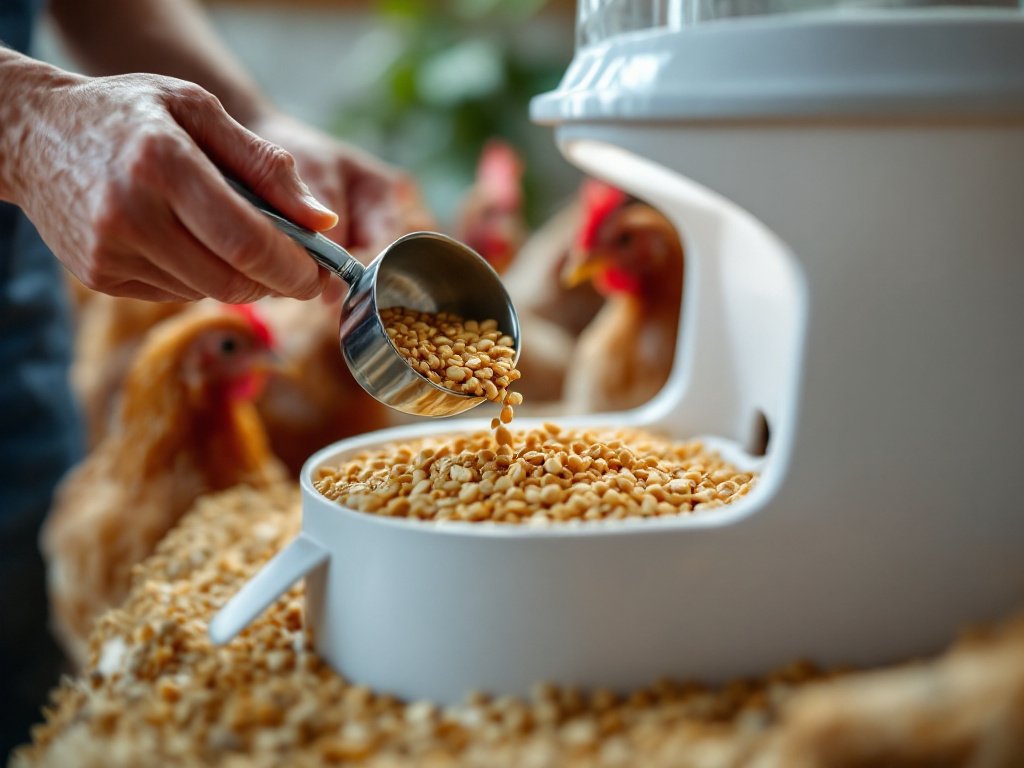
Other key factors:
- Start/Layer/Broiler Feed Type: High-protein starter feeds go farther per pound than lower-protein layer feed.
- Free-ranging: Chickens with real ground to roam may get significant calories from bugs and greens, especially in spring/summer.
- Breed differences: Heavy dual-purpose birds (like Buff Orpingtons) eat more than petite breeds.
- Molting or health events: Sick or molting hens may eat less, but need higher-nutrient feed.
Check out our no-waste chicken feeder guide if spillage is eating into your results.
Chicken Feed Cost Per Month: Real-World Calculations
Feed cost per month varies not only by flock size but by region, season, and whether you buy conventional or organic feed. U.S. prices range from about $12–35 for a 50-pound standard feed bag, while organic feed goes for $38–62 per bag [Source]. In Pakistan, prices can be lower in Punjab but are reported as 10–25% higher during winter months in regions like KPK or Balochistan [Source].
To estimate your own monthly cost:
- Multiply daily feed amount per bird (in grams) by flock size.
- Multiply that number by 30 (days).
- Convert total grams to kilograms or pounds (1000g = 1kg, 454g = 1lb).
- Divide by the weight of the feed bag to get bags/month.
- Multiply bags/month by your local price per bag (be sure to build in a 5–10% buffer for waste or spoilage).
Example: 5 hens x 120g/day x 30 days = 18kg feed/month. If a 50-pound (22.7kg) bag costs $20, monthly cost (without waste) is roughly $16, but is likely to run closer to $17–18 after accounting for some natural spill and top-off feeding.
For practical strategies on reducing feed waste and spending, check out our chicken cost breakdown guide.
Top 3 Chicken Feeding Problems—and How to Avoid Them
Most guides gloss over the everyday pitfalls that blow up feed budgets or undercut poultry health. Here are the most common issues, backed by real-world experience:
- Overfeeding Chickens: Topping off half-empty feeders, mixing in too many treats or extra scratch, and “just in case” filling all encourage birds to binge and spill. Even a modest mistake here adds up over the month, especially in small flocks [Source].
- Underfeeding: Guessing rations too low or letting feeders empty completely leads to stress, lower egg production, and sometimes feather picking or illness.
- Feed Waste (Spill & Spoilage): Using open pans or low-quality feeders allows chickens to bill out feed onto bedding and lose it to rodents or damp, pushing costs much higher than calculated.
Comparison Table: Feeding Problem Impact
| Problem | Result | How to Prevent |
|---|---|---|
| Overfeeding | Higher costs, obese/sick birds, dirty bedding | Measure rations, avoid daily topping-off |
| Underfeeding | Poor production, pecking, stress | Weekly weight checks & ration review |
| Spillage/Waste | Feed lost, attracts pests, extra cleaning | Use treadle/hanging feeders, store feed dry |
Want to see the best gear to stop waste? See our automatic chicken feeder picks.
Beyond the Basics: Seasonal Adjustments, Feed Efficiency, and Saving Money
What most chicken feeding guides skip? Real, season-by-season planning and advanced cost savings. In summer heat, chickens eat far less, so keep feeders shaded, switch to smaller, fresher portions, and increase electrolytes in water (here’s why). In winter, feed costs can spike in regions like Pakistan’s KPK and Balochistan by 10–25% due to supply issues [Source].
- Feed Conversion Hacks: Only keep as many birds as you truly need. Select efficient breeds (see egg-laying breed comparisons), and regularly compare body condition to intake.
- Storing Bulk Feed: Store in sealed, rodent-proof containers (see options). Only buy in large volume if you have a dry, cool place—damp feed molds and quietly wastes big money.
- Adapt rations: Use higher-energy feeds or grains in cold snaps, but be vigilant for spoilage. Only offer “scraps” that are safe (no moldy bread, avocado, or salty leftovers—see our dangerous food list).
Your next big feed-saving upgrade? Try a insulated winter chicken coop—in cold zones, warm, draft-free hens need less feed for basic survival and more for eggs.
Sample Feeding Schedule & Cost Table (Printable)
Here’s a ready-to-use chart to help plan daily, weekly, and monthly chicken feed and cost per flock size. Adjust the numbers for your breed and regional bag prices.
| Flock Type | # of Birds | Feed per Bird (g/day) | Total Feed/Month (kg) | Bags/Month (50lb/22.7kg) | Base Cost (at $20/bag) | Waste Buffer (+10%) | Total Cost |
|---|---|---|---|---|---|---|---|
| Layers | 5 | 120 | 18 | 0.8 | $16 | $1.60 | $17.60 |
| Broilers | 8 | 145 | 34.8 | 1.5 | $30 | $3 | $33 |
| Urban micro-flock | 3 | 120 | 10.8 | 0.48 | $9.60 | $0.96 | $10.56 |
Tip: Print or copy this and adjust monthly. Check your waste rate and actual bag cost to keep budgets realistic as market prices change or as you transition to organic feeds.
For a step-by-step setup, check how many chickens to start with and how housing choices affect costs with our coop space planner.
Conclusion
Successful backyard chicken keepers track feed per hen per day, watch for subtle changes in weather or bird behavior, and budget for periodic price swings—or risk costly surprises. Whether in the U.S. or Pakistan, how much do chickens eat per day changes by age, breed, and climate, and avoiding spill, top-off feeding, and bulk feed spoilage pays off fast. The right numbers and realistic monitoring are the secret to flock health and wallet sanity.
Ready to take the next step? Choose the right feeder or check our seasonal winter care tips and find your best feed-saving tools now.
FAQ
How much feed per hen per day for layers?
Most laying hens need about 0.25–0.35 lb (113–159g) of complete feed daily—that’s typically ½–¾ measuring cup per bird.
How do I adjust feed in extreme heat?
Chickens eat less in high heat, sometimes dropping to just 85–120g a day at temperatures near 35°C. Feed more in the cool early morning or evening, offer fresh water often, and reduce treats.
What percent of chicken costs is feed?
Feed is a major cost of raising chickens, but its share of total costs varies with the production system and local prices.
How can I stop feed waste?
Use no-waste feeders, avoid topping off partially empty feed, and measure out daily rations by weight or cup, not just by eye.
Is organic feed worth the cost?
Organic feed tends to cost much more per bag. Decide based on your own priorities (egg quality, environmental concerns), but always compare how much your birds actually eat on each type to find true value.
Sources
- Alabama Cooperative Extension: Feeding the Laying Hen
- Oklahoma State University Extension: Simple Budgeting and Pricing Calculations for Backyard Hens
- Frontiers: A review of heat stress in chickens, Part II
- Journal of Animal Physiology and Animal Nutrition: Heat stress management in poultry
- Poultry Response to Heat Stress: Its Physiological, Metabolic, and Production Effects